Home›
Casting moulds & Jigs
Frequently Asked Questions
- What tooling family do I need for my part?
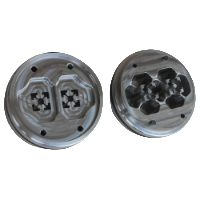
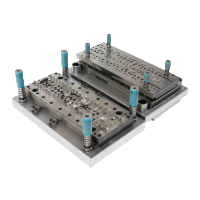
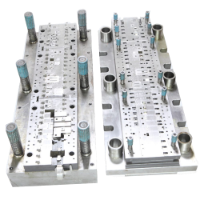
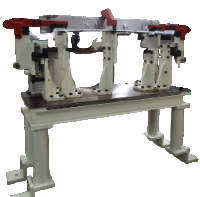
- It depends on material and process. Injection or compression moulds suit plastic and rubber parts; die-casting dies suit aluminium and zinc castings; progressive and forming press dies suit sheet-metal stampings; and jigs and fixtures hold or guide work during machining, welding, assembly and inspection. Share the part, material and annual volume and a partner can scope the tool.
- What is the typical minimum order for tooling?
- Moulds, dies and jigs are dedicated tooling, so they are usually quoted as single tools or small sets rather than against a piece MOQ. Cost scales with size, cavity or station count, steel grade and surface treatment, and bundling related tools into one package can help. Treat any quantity guidance as indicative until your tooling is quoted.
- Which certifications and trial documents are available?
- Where specified, partners can provide tool-steel material certificates such as EN 10204 3.1, hardness (HRC) records, first-article and dimensional reports, and tool-trial or sample-approval documentation. Acceptance against ISO 2768 or your GD&T scheme can be documented. Document availability is confirmed per order rather than assumed across all partners.
- What steel grade, hardness and surface treatment should I specify?
- Specify the tool-steel grade (for example P20 mould base, H13 die-casting and hot work, D2 cold-work die) and target hardness in HRC, plus surface treatment such as nitriding, hard chrome, PVD coating or texturing for release and wear. State cavity or station count and cooling needs. Share your drawing or math data so the tool can be specified correctly.
- Can tooling be built to our OEM drawing, math data or sample?
- Yes, a subset of partners build to OEM drawings, CAD math data or sample parts, including duplicate and multi-cavity tooling, with sample trials before release. Some partners supply into OEM programmes, but specific approvals should not be assumed as blanket facts; share your data or spec at inquiry and a qualified partner can be matched to the build.
- What lead times and delivery terms apply to Europe and the GCC?
- Tooling lead times depend heavily on size, cavity count and treatment, with simple jigs faster than multi-cavity moulds or large dies; treat any figure as indicative until quoted. Full CIF delivery to Rotterdam, Antwerp, Jebel Ali or Dammam can be arranged, with sea freight added to the build window.