Injection Moulds
Source injection moulds from India's verified manufacturers and exporters on Himalay. Browse the full range for industrial and export applications.
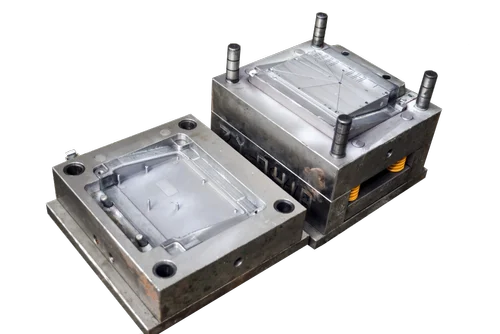
About Injection Moulds
Injection moulds are the precision steel tools used in plastic injection moulding, where molten thermoplastic or thermoset is injected under pressure into a closed cavity, cooled, and ejected as a finished part. They are the dominant high-volume plastics tooling, producing everything from electrical housings and automotive trim to medical and packaging components, and are valued for tight repeatability, fine detail, and very low piece cost at scale.
Moulds are built from mould-base and cavity steels selected by run length and material: pre-hardened P20 (around HRC 28-32) for general-purpose and mid-volume tools, through-hardened H13 (around HRC 48-52) for high-volume and abrasive glass-filled resins, and stainless 420/S136 for corrosive or optical-grade work. Mould bases commonly follow DME (imperial) or HASCO (metric) standards for interchangeable plates, leader pins, and ejector components. Cavity count, runner type (cold or hot runner), and gating are set by part geometry and annual volume; P20 tools often run 1-4 cavities for first iterations, while hardened multi-cavity tools serve high volumes.
Materials processed cover the full thermoplastic range; tool steels are heat-treated and may be textured, polished, or coated.
Configuration covers two-plate, three-plate, hot-runner, and family moulds, with first-article and capability studies on the moulded part.
Himalay coordinates material traceability via EN 10204 3.1 certificates for the tool steel where requested, mould trial (T1/T2) reports, dimensional reports on moulded samples, RoHS/REACH declarations, and CE support where the part enters a regulated assembly, all coordinated as part of the standard order flow.