Shell Moulds
Source shell moulds from India's verified manufacturers and exporters on Himalay. Browse the full range for industrial and export applications.
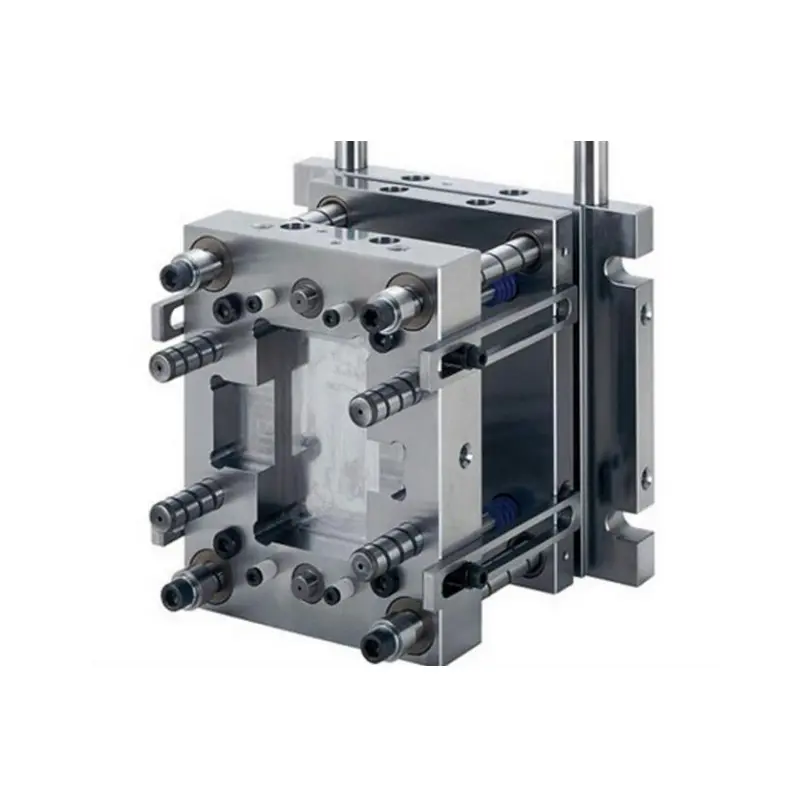
About Shell Moulds
Shell moulds are produced by the shell-moulding (Croning) process, in which a resin-coated sand is dumped or blown against a heated metal pattern plate so a thin, cured shell forms; two matching shells are then clamped to make a mould. The thin, rigid, dimensionally stable shell gives better surface finish and tighter tolerances than conventional green sand, making the route suitable for medium-volume ferrous and non-ferrous parts such as gears, camshaft components, brackets, manifolds, and pump and valve parts.
The heated pattern equipment is the core tooling, typically machined from cast iron or steel to give long life on automated shell lines. Shell-moulded castings commonly reach ISO 8062 tolerance grades around CT8-CT10 and good as-cast surface finish, reducing machining stock. Cast grades follow IS 210 grey and ductile iron, ASTM A48/A536, and ASTM A216 WCB for steel, with EN equivalents where specified.
Materials cast include grey and ductile iron, carbon and low-alloy steels, and aluminium and copper alloys. Pattern plates are heated and treated for wear; shell sand grade and resin content are selected for finish and strength.
Configuration covers single- and multi-impression pattern plates, integral or separate cores, and gating tuned for the thin-shell process, with first-article dimensional verification.
Himalay coordinates material traceability via EN 10204 3.1 certificates where requested, chemical and mechanical test reports, NDT (MPI/DPI/RT) and dimensional reports, and PED/CE support where relevant, all coordinated as part of the standard order flow.