Home›
Screws
Frequently Asked Questions
- What's the typical MOQ for machine screws?
- Standard machine screws (M3 through M12, DIN 84/963/912, plain or zinc-plated, Grade 8.8 or equivalent): typical MOQ is 5,000–10,000 pieces per size, due to the batching economics of cold-heading production. Stainless A2/A4: 3,000–5,000 pieces. Specialty grades, large sizes (M16+), and bespoke coatings: 1,000–2,000 pieces per size. Small bolts and screws are high-volume, low-unit-cost items — shipping a mixed BOM across 10–20 sizes in a single consolidated order is the typical approach.
- Torx vs Phillips vs Allen — which drive style should I specify?
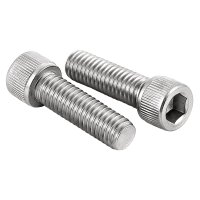
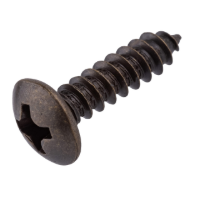
- Torx: highest torque capacity, lowest cam-out risk, industry standard in automotive and modern electronics. Specify Torx when tool-driven production or field maintenance requires reliable high-torque installation. Allen (internal hex): compact head, high torque, standard for cap screws and socket-head applications — widely tooled and available. Phillips: general assembly, lower cost, older standard — specify where installation is manual and cost is primary. Pozidrive (cross with four additional slots): better cam-out resistance than Phillips but less torque than Torx — common in European joinery and automotive legacy.
- Can you supply screws with specialty coatings — Xylan, Magni, Delta-Tone?
- Yes — via partner coating specialists. Xylan (PTFE-reinforced polymer coating, 1 mil thick): excellent marine and chemical corrosion resistance, typical for offshore bolting and corrosive-service screws. Magni 565/577: zinc-flake + organic topcoat, commonly specified in automotive OEM joints. Delta-Tone: zinc-aluminium flake coating, high-temperature resistance, non-hydrogen-embrittlement (safe for high-strength grades). Coating application adds 2–3 weeks to lead time and is typically priced per square metre of surface area.
- Self-tapping vs thread-forming screws — which is right for sheet metal?
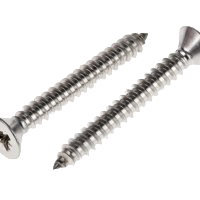
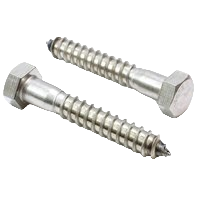
- Self-tapping screws (DIN 7970, Type AB or B) cut a mating thread in the substrate — chip is produced as the thread is formed, and the screw is intended for single-use installation. Suitable for sheet metal up to ~3 mm and some plastics. Thread-forming screws (TAPTITE, Plastite, Trilobular) deform the substrate to form the thread without cutting chips — stronger joint, reusable, but require softer substrates (aluminium, plastics, thin-wall steel). For stainless or harder substrates over 3 mm, use through-drilled with machine screw and nut or tapped hole with machine screw — self-tappers will struggle.
- Do you supply tamper-resistant / security screws?
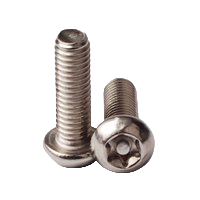
- Yes. Pin-Torx, Pin-Hex, Tri-Wing, Spanner (snake-eye), Clutch, and one-way (slotted drive that only rotates one direction) are all sourced. MOQs are higher due to specialty tool requirements for production — typically 2,000–5,000 pieces per size. Commonly specified for public-infrastructure fixings, electronics enclosures, and anti-theft applications. Security screws ship with matched driver bits for installation.
- Typical lead time for bulk screw orders?
- Standard sizes and grades with existing tooling: 3–5 weeks from order to FOB Mumbai, including heat treatment, plating, and quality release. Stainless: 4–6 weeks. Specialty drive styles or coatings: add 1–3 weeks. Custom lengths or dimensions outside standard tooling: add 2–4 weeks for tool setup. Mixed-BOM orders (20+ size/grade combinations) typically ship in 5–7 weeks consolidated.