Roofing Screw
Source roofing screw from India's verified manufacturers and exporters on Himalay. Browse the full range for industrial and export applications.
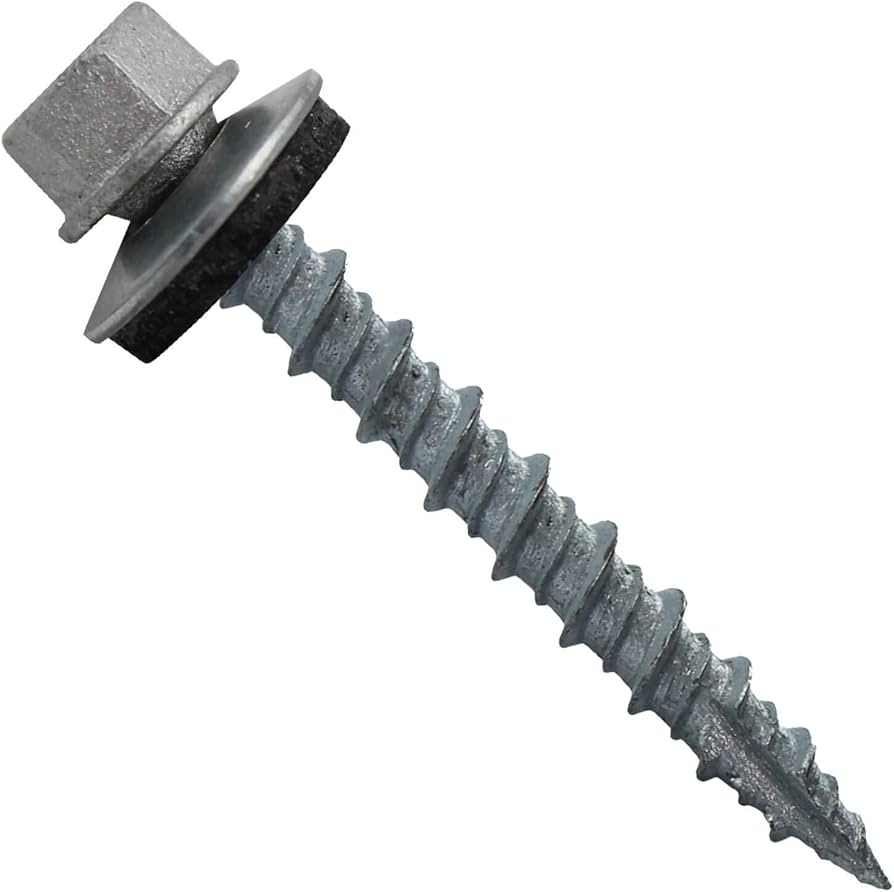
About Roofing Screw
Roofing screws are self-drilling or self-tapping fasteners used to secure metal roofing, cladding and sandwich panels to steel purlins, timber battens or sheet substrates. A typical roofing screw combines a hex washer head, a bonded EPDM-backed sealing washer and either a drill point (for steel) or a sharp gimlet point (for timber), so that drilling, tapping and weather-sealing happen in a single driven action. Common variants include self-drilling screws to a recognised point classification (point types broadly graded by the thickness of steel they penetrate), self-tapping wood-fix screws, and stitching screws for sheet-to-sheet laps; head styles run hex-flange, pancake and countersunk, with shank diameters commonly in the No. 10-No. 14 / 5.5-6.3 mm range. Carbon steel is the usual base, case-hardened for self-drilling performance; corrosion protection is generally the deciding spec, ranging from zinc plating through hot-dip galvanising to proprietary multi-layer coatings, with bi-metal (austenitic stainless head on a carbon drill point) used where stainless durability meets self-drilling need. The integral EPDM washer is the primary watertightness element and is typically matched to substrate, panel thickness and UV exposure, while head-cap colour matching is often added for visible roof lines. On the configuration and testing side, the controlling variables are usually drill-point class versus base-metal thickness, thread pitch, overall length to suit panel plus purlin stack-up, and the seating torque that compresses the washer without over-driving; manufacturers generally verify drilling capacity, thread-forming and washer integrity on a sampling basis. Where specified, Himalay coordinates material traceability, salt-spray (ASTM B117) corrosion data, coating-thickness reports and bonded-washer batch certificates, with RoHS/REACH declarations for coatings and CE marking under harmonised construction-product routes where the destination market requires it, coordinated as part of the standard order flow.