Check valves across 22,043 listed configurations — swing, dual-plate, lift, non-slam axial and cryogenic — DN8 to DN600 in 21 body materials. Compare options and submit an RFQ on Himalay.
Sourcing at a Glance
- HS Code(s)
- 8481.30 (six-digit — check/non-return valves have their own HS subheading, unlike the 8481.80 used by other valve families; 8-digit ITC-HS pending CHA confirmation)
- MOQ Range
- Quoted per order
- Sample Lead Time
- Quoted per order
- Production Lead Time
- Quoted per order
- FOB Basis
- Quoted per order
- Standards / Certifications
- API 594, BS 1868, IS 5312, EN 12334, EN 14341, AWWA C508, BS 6364/ISO 28921
Specifying Check Valves: Type, Slam Behaviour, Pattern and Class
The selection problem. A check valve is operated by the fluid, not by you. Select for the flow regime — steady or pulsating, clean or solids-bearing, slam-prone or benign — and size for the actual flow, not the pipe bore. An oversized check never fully opens and flutters itself to destruction; an undersized one wastes pressure.
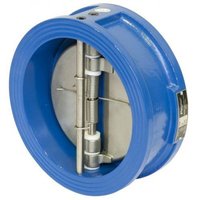
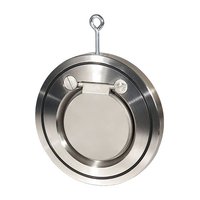
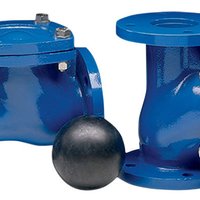
Six catalogue families. Swing checks span the widest range — PN6–PN40 and ASME 125–1500 — and remain the default for general service. Dual-plate checks (ASME 150–1500) give short face-to-face, low weight and spring-assisted fast closure. Lift checks (ASME 150–1500) serve clean small-bore high-pressure lines. Non-slam axial checks (ASME 150–1500) are specified where water hammer on critical pump discharge is the governing risk. Cryogenic swing (ASME 150–600) and forged piston (Class 800) checks cover low-temperature duty.
Specification checklist. Hard points: service medium; size; pressure class; face-to-face standard; end pattern; body grade; trim; installation orientation and flow direction. Check valves have no operator, so the operation-type questions of other families are replaced by one critical addition: the closure behaviour your system needs — standard, spring-assisted or non-slam.
Size and class coverage. DN8–DN600 across 22,043 configurations. Wafer dual-plate designs give the shortest face-to-face and lowest weight of the listed patterns; API 594 Type A covers the short-pattern wafer/lug/double-flanged family while Type B covers long-pattern bolted-cover swing checks.
Materials against service. WCB/WCC for general process; LCB/LCC below −29 °C per the Charpy threshold; CF8M/CF3M stainless, duplex 2205 and the corrosion alloys — Alloy 20, Monel 400, Hastelloy C276, titanium Gr 2, 6Mo, aluminium bronze — for aggressive media; chrome-moly WC6/WC9 above roughly 425 °C and C12A (P91) above roughly 550 °C; cast and ductile iron with bronze/SS410 seat rings for waterworks. Stellite-hardfaced Trim 5 seats answer wear at temperature.
Slam engineering. The pressure spike from a slamming check scales with the reverse velocity at the instant of closure. Gravity swing discs close slowest; springs accelerate dual-plate closure; axial non-slam designs close before reverse flow establishes. For high-inertia systems — long discharge lines, high static head, fast-tripping pumps — specify the non-slam family and state the system profile in the enquiry.
Standards map. API 594 defines the two check-valve types — Type A short-pattern (wafer, lug, double-flanged; single- or dual-plate) and Type B long-pattern bolted-cover swing. BS 1868 covers steel swing checks for petroleum service and pairs with API 594 on catalogue SKUs. IS 5312/EN 12334 cover general-purpose checks, EN 14341 steel checks to the European series, AWWA C508 waterworks swing checks, and BS 6364/ISO 28921 cryogenic testing.
Import conformity. EU: PED 2014/68/EU category and module, CE marking, EN 10204 3.1 certificates. Saudi Arabia: SABER. UAE: ECAS. Sour service: NACE MR0175 on wetted parts. Pressure testing follows API 598.
From spec to RFQ. A complete check-valve enquiry states: medium and cleanliness, DN/NPS, class, face-to-face, end pattern, body grade, trim, orientation, slam sensitivity, and destination market. Share the line spec or pump datasheet with the RFQ and the configuration is matched against the catalogue directly.
How Check Valves Work
Mechanism: opened and closed by the flowing medium, not an operator. A check valve carries no handwheel, actuator or external signal — the fluid itself opens and closes it. For the swing design, "the pressure differential across the valve determines if the valve moves to the open or closed position": "a higher pressure on the outlet side will move the valve to the closed position, but the valve will open again once the pressure on the inlet side is greater than the outlet side." The two thresholds that describe this have names — "the point at which flow starts to occur through the valve is known as the cracking pressure," and "the point at which all flow stops through the valve is known as the seating or sealing pressure." On reverse flow, "the valve disc will be pressed against the seat and all flow will stop" — no external signal is involved at any stage.
Industries served: anywhere reverse flow would damage equipment or contaminate a line. Check valves are used "in various applications across numerous industries including process manufacturing," with documented use spanning water treatment plants, chemical production plants, sewer systems, and fuel and irrigation pump installations. Their function is protective by design: "backflow can easily damage filters, pumps, water meters, HVAC compressors and other expensive equipment built for unidirectional flow." That is also the logic behind the catalogue's non-slam axial family — a slamming disc creates the pressure spike the valve exists to prevent, and spring-assisted closure of the kind used in dual-plate designs is identified as "best suited" to controlling that water-hammer risk.
Standards landscape: two petroleum-industry specifications, split by construction pattern rather than by service. API 594 "covers the design, material, face-to-face dimensions, pressure-temperature ratings, and examination, inspection, and test requirements for two types of check valves." "Type 'A'" valves are short face-to-face wafer, lug or double-flanged designs, single- or dual-plate; "Type 'B' bolted cover swing check valves are long face-to-face" with flanged or butt-welding ends — together the standard spans DN 50 to DN 1200. BS 1868 sits alongside it, "specif[ying] requirements for cast steel check valves or forged steel check valves with flanged or butt-welding ends" across five types — swing, plus piston, ball and disc lift variations — for Classes 150 to 2500 in sizes 15 mm to 600 mm. Both target the same petroleum, petrochemical and allied-industries scope the catalogue's design-standard field already carries against these SKUs. Sources: [saVRee — Swing Check Valve](https://savree.com/en/encyclopedia/swing-check-valve); [Processing Magazine — Check Valves: The Unsung Heroes of Your Piping Systems](https://www.processingmagazine.com/valves-actuators/article/21234666/check-valves-the-unsung-heroes-of-your-piping-systems-and-the-safety-net-for-your-equipment); [ReliaValves — API 594](https://www.reliavalves.com/api-standard/api-594); [ReliaValves — BS 1868](https://www.reliavalves.com/bs-standard/bs-1868)
Frequently Asked Questions
- Swing, dual-plate or lift check — which type should I specify?
- Swing checks are the general-service default — full-flow, low pressure drop, tolerant of moderate solids, listed here from PN6 to ASME 1500. Dual-plate checks halve the face-to-face and weight, and in the conventional spring-loaded construction close faster than a gravity swing disc, fitting between flanges in wafer pattern — the compact choice for pump discharge and space-limited racks. Lift checks suit small-bore, clean, high-pressure service where a piston or ball rises off a seat. All three are listed catalogue families. State medium and phase, plus installation orientation, in the enquiry.
- What stops water hammer — and when do I need a non-slam check valve?
- Slam happens when reverse flow accelerates before the disc closes: the disc slams shut, and the arrested liquid column spikes the pressure. Non-slam axial checks — a listed catalogue family in ASME 150–1500 — use a short disc travel and spring return to close as forward flow decays, before reverse velocity develops; spring-loaded dual-plate designs close far faster than gravity swing discs. Specify non-slam types for high-head pump discharge, long discharge lines and vertical risers, and state the pump trip scenario in the enquiry so closure characteristics can be matched.
- Why choose a wafer-pattern check valve?
- A wafer check clamps between pipe flanges — no body flanges of its own — cutting length, weight and cost against a flanged swing check of the same size; wafer is a listed end pattern alongside flanged, butt-weld, threaded, socket-weld, grooved and mechanical joint. API 594 Type A covers exactly this short-pattern wafer/lug family, single- or dual-plate. For retrofit, confirm the face-to-face standard so the valve drops into the existing spool.
- Does installation orientation matter for check valves?
- Yes — check valves are inherently unidirectional. Permitted orientations are set by body pattern rather than by family: swing checks are commonly installed horizontally or in vertical up-flow, lift checks are supplied in pattern-specific horizontal or vertical bodies, and spring-loaded dual-plate and axial designs do not depend on gravity to close. State line orientation and flow direction in the enquiry; the flow arrow on the body must match the installed direction.
- Are cryogenic check valves available?
- Yes — two listed cryogenic families: swing checks in ASME 150–600 and forged piston checks in Class 800 — cryogenic swing bodies in the austenitic stainless family (CF8, CF8M, CF3M) and the forged piston type in A182 F316, all with cryo-tested SS316 trim, referencing BS 6364/ISO 28921. Below −29 °C, low-temperature grades replace standard carbon steel — the conventional Charpy threshold. State design temperature in the enquiry.
- What conformity documentation applies for EU, Saudi and UAE imports?
- EU: PED 2014/68/EU categorisation and CE marking per the applicable module, with EN 10204 3.1 material certificates as the procurement baseline; Saudi Arabia: SABER; UAE: ECAS; sour hydrocarbon service invokes NACE MR0175 on wetted parts. State the destination market in the enquiry.
Last verified: 6 August 2026
Request a Quote for Check Valves