Check Valves sourcingAbout Check Valves
Check valves across 22,043 listed configurations — swing, dual-plate, lift, non-slam axial and cryogenic — DN8 to DN600 in 21 body materials. Compare options and submit an RFQ on Himalay.
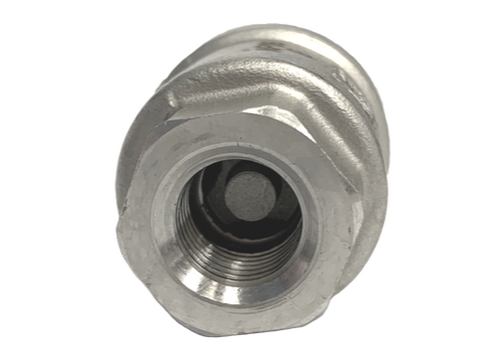
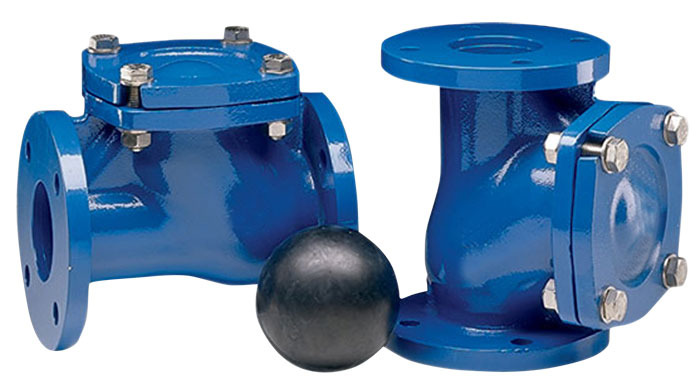
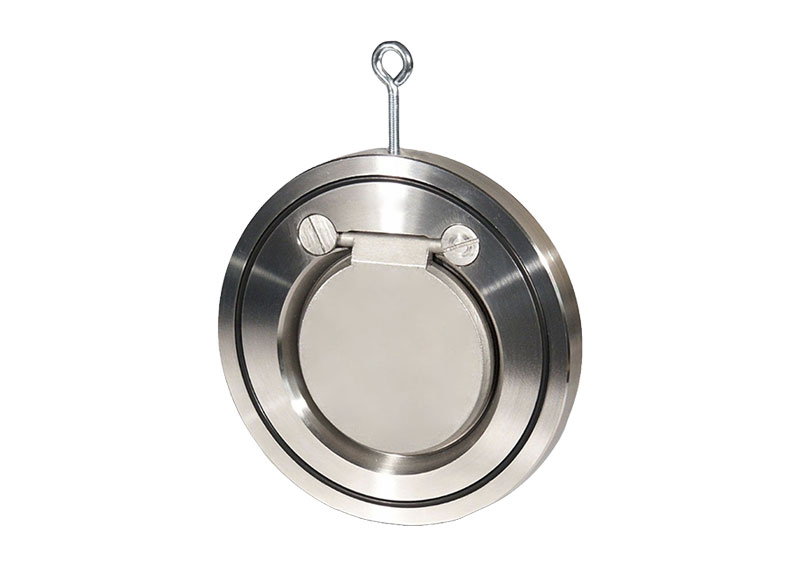
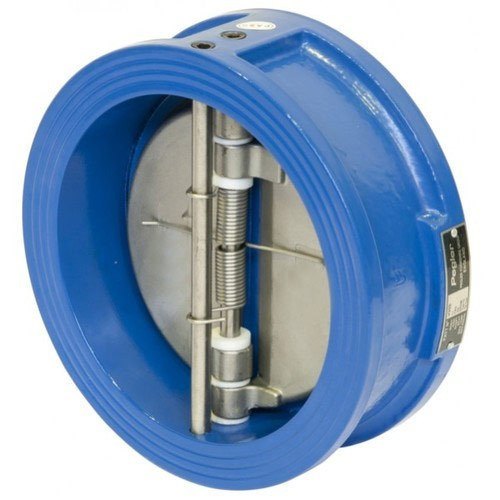
Check valves are self-acting non-return valves: forward flow opens them, reverse flow closes them, with no operator or actuator. They protect pumps and compressors from backspin, prevent reverse contamination between systems, and hold columns of liquid during shutdowns — and because the flowing medium itself operates the valve, correct type selection and sizing carry more weight than on an operated valve. Himalay lists check valves in six design families: swing check for general service, dual-plate for compact low-pressure-drop duty, lift check for small-bore and high-pressure lines, non-slam axial for pump-protection service where water hammer is a risk, and cryogenic swing and forged piston check valves for low-temperature service. The catalogue spans 22,043 configurations from DN8 to DN600. Swing valves run PN6–PN40 and ASME 125–1500; dual-plate, lift and non-slam axial types run ASME 150–1500; cryogenic piston checks are forged Class 800. Twenty-one body materials are listed, from WCB/WCC carbon steel, low-temperature LCB/LCC and the stainless family (CF8, CF8M, CF3M, CF8C) through duplex 2205, chrome-moly WC6/WC9/C12A-P91, cast and ductile iron, and corrosion alloys — aluminium bronze, Alloy 20, Monel 400, Hastelloy C276, titanium Gr 2 and 6Mo — plus forged F316. Trims include 13Cr, SS316, stellite-hardfaced (Trim 5) and bronze/SS410 seat rings. End patterns are flanged, butt-weld, wafer, threaded, socket-weld, grooved (AWWA C606) and mechanical joint. Steel valves follow API 594 and BS 1868; water and general service follow IS 5312/EN 12334 and AWWA C508; EN 14341 covers the European steel check-valve series; cryogenic valves BS 6364/ISO 28921. State medium, size, class, body grade, end pattern and installation orientation in your enquiry.