Ball Valves
Quarter-turn valves used for fast shutoff, offering tight sealing and low torque operation.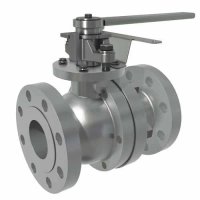
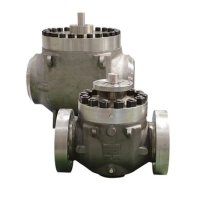
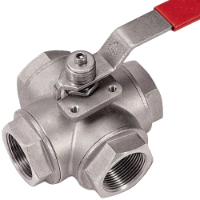
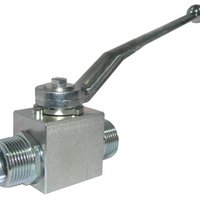
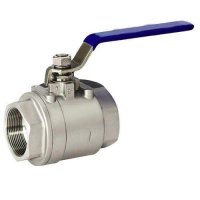
Ball valves across 16,994 listed configurations — floating to ASME 600, trunnion-mounted to ASME 2500, plus 3-way, true-union and cryogenic types — DN8 to DN600. Compare and submit an RFQ.
Sourcing at a Glance
- HS Code(s)
- 8481.80 (six-digit; 8-digit ITC-HS pending CHA confirmation)
- MOQ Range
- Quoted per order
- Sample Lead Time
- Quoted per order
- Production Lead Time
- Quoted per order
- FOB Basis
- Quoted per order
- Standards / Certifications
- API 608, BS 5351, ISO 17292 (BS EN 17292), API 6D, ASME B16.34, IS 6912, EN 13828, EN 1983, EN ISO 16135, BS 6364/ISO 28921
Specifying Ball Valves: Floating vs Trunnion, Bore, Seat and Class
The floating/trunnion decision. Every ball-valve specification starts here. Floating designs seal by letting line pressure wedge the ball against the downstream seat: fewer parts, lower cost, and complete adequacy for the small-to-mid sizes and classes that dominate plant piping — in this catalogue, PN16–PN40, ASME 150–600 and forged Class 800. Trunnion designs carry the ball on fixed bearings with spring-energised seats: torque stays manageable as size and pressure climb, double-block-and-bleed isolation becomes available between the two seats, and the catalogue range extends to ASME 2500.
Seven catalogue families. Beyond floating and trunnion: compact commodity valves (IS 6912 PN25, 600/1000 WOG) for utility duty; 3-way valves (ASME 150/300) for diverting and mixing; true-union thermoplastic valves (PN10/16) for corrosive low-pressure service; and cryogenic extended-bonnet floating (ASME 150/300) and trunnion (ASME 150–600) valves where the bonnet extension keeps stem packing out of the cold zone.
Specification checklist. Hard points: service medium; size (DN/NPS); pressure class; face-to-face standard; end connection; body grade; seat material; operation. Bore — full or reduced — is a conditional dealbreaker: state it whenever pigging or pressure drop matters. Automated valves add fail-safe mode and actuator torque; ISO 5211 bare-stem mounting is a listed option for direct actuator fitting.
Size and class coverage. DN8–DN600 across 16,994 configurations. Forged small-bore valves (A105, F304/F316 — listed grades) serve the DN8–DN50 band including Class 800; cast bodies carry the larger sizes.
Materials against service. WCB carbon steel and CF8M stainless cover most process duty. Brass and bronze/gunmetal serve utility and marine-adjacent low-pressure lines. Duplex 2205 and super duplex 2507 answer chloride attack; Alloy 20, Monel 400, Hastelloy C276, titanium Gr 2 and 6Mo cover aggressive chemistry; aluminium bronze serves seawater. Low-temperature carbon steel A352 LCB applies below the −29 °C Charpy threshold. Thermoplastics — PVC-U, CPVC, PVDF — handle corrosive water-treatment chemistry at PN10/16.
Seat logic. PTFE to roughly 200 °C; RPTFE and Devlon for higher wear and pressure; FKM and EPDM where elastomer seats fit the medium; metal seats for abrasive or hot service; PCTFE (Kel-F) at cryogenic temperatures where PTFE cold-flows. High cycle rates — above roughly 500 cycles/day — call for upgraded seat materials.
Standards map. API 608 and ISO 17292 govern metal ball valves for petroleum, petrochemical and allied industry piping — ISO 17292's current edition extends to DN600/NPS 24 and aligns with API 608, having superseded BS 5351. API 6D governs pipeline valves. ASME B16.34 supplies pressure-temperature ratings. IS 6912/EN 13828 cover commodity valves, EN 1983 copper-alloy valves, EN ISO 16135 thermoplastic valves, and BS 6364/ISO 28921 cryogenic testing — all listed catalogue standards.
Fire-safe and sour service. Hydrocarbon isolation typically mandates API 607 fire-safe certification; API 6FA covers the full-scale fire test; both are specifiable. Sour service invokes NACE MR0175 hardness limits on all wetted parts. Blowout-proof stem construction is a stated safety requirement — confirm it in the specification.
Import conformity. EU: PED 2014/68/EU category and module, CE marking, EN 10204 3.1 certificates. Saudi Arabia: SABER. UAE: ECAS. Seat and shell testing follows API 598 pressures.
From spec to RFQ. A complete ball-valve enquiry states: medium, DN/NPS, class, bore, face-to-face, ends, body grade, seat, operation, fire-safe/NACE requirement and destination market. Share the line spec or datasheet with the RFQ and the configuration is matched against the catalogue directly.
How Ball Valves Work
Mechanism: a bored sphere that rotates a quarter-turn to align or block the bore. A ball valve is "named for its round ball that sits in the interior of the valve body and pushes into a seat to control or provide on/off functions in fluid pipelines," and it works "by rotating a ball with a central bore or port that allows or obstructs flow." "When the cross-section of the bore is perpendicular to the direction of flow, the valve halts fluid passage. Conversely, when the bore is aligned with the flow direction, it permits the fluid to pass through." The catalogue's two main families seal differently: in a floating design, "the ball is riding snugly between two seats… the force of the fluid acts on the ball to push it into the seat located in the downstream valve body," while a trunnion design "is held in the body via a trunnion… and by the stem at the top," so "the seat must float to the ball instead" — the mechanical reason trunnion valves handle the catalogue's higher pressure classes at lower operating torque.
Industries served: general isolation duty at one end, extreme service at the other. Trunnion ball valves see their heaviest use "for pipeline service," and are "especially popular in natural gas pipelines in diameters up to 60" and pressures up to class 600" — sizes and classes the catalogue's own trunnion range extends into. Smaller floating valves cover a far broader spread, serving "many different applications from household plumbing to those containing the harshest chemicals," and across both families the valve type is standard equipment in "petrochemical, water treatment, HVAC, and pharmaceuticals" as well as "oil and gas, chemical processing, food and beverage, power generation" and general water distribution.
Standards landscape: a plant-piping code and a pipeline-transmission code that are not interchangeable. API 608, together with ISO 17292 — whose current edition "extended to DN600/NPS 24" and aligns with API 608, having superseded the older BS 5351 — governs metal ball valves for petroleum and petrochemical plant piping with flanged, threaded and welding ends; all three are listed catalogue design standards. Pipeline-transmission duty instead falls under API 6D, which sets requirements for the "design, manufacturing, materials, welding, quality control, assembly, testing, marking, documentation and process controls" of ball, gate, check and plug valves "for application in the petroleum and natural gas industries," across pressure Classes 150 through 2500. The two regimes test and document differently, which is why plant-piping and pipeline enquiries need to state which standard applies rather than leaving it to the maker to assume. Sources: [Valve Magazine — Ball Valve Basics](https://valvemagazine.com/articles/ball-valves-basics/); [IQS Directory — Functions, Types, Parts and Advantages of Ball Valves](https://www.iqsdirectory.com/articles/ball-valve.html); [Relia Valve — API 6D: Specification for Valves in the Petroleum and Natural Gas Industries](https://www.reliavalves.com/api-standard/api-6d)
Frequently Asked Questions
- Floating or trunnion-mounted — which ball valve do I need?
- A floating valve lets line pressure push the ball onto the downstream seat — simple and economical, listed here in PN16–PN40, ASME 150–600 and forged Class 800; a trunnion valve fixes the ball on bearings and spring-energises the seats against it, cutting operating torque and enabling the ASME 900–2500 classes and larger bores the catalogue carries. As size and class rise, floating-ball torque grows quickly, which is where trunnion designs take over. State size, class and medium and the type follows.
- Full bore or reduced bore?
- Full bore matches the ball's port to the pipe internal diameter — required for pigging, preferred where pressure drop or flow-metering accuracy matters; reduced bore is smaller, lighter and cheaper for plain isolation. State bore requirement explicitly in the enquiry, and note that pipeline valves to API 6D — a listed catalogue standard — are commonly specified full bore for pigging.
- Are fire-safe certified ball valves available?
- Fire-safe certification — API 607 for soft-seated quarter-turn valves, API 6FA for the full-scale fire test — is a specifiable requirement on catalogue ball valves; it verifies a secondary metal seal after the soft seat burns away. Hydrocarbon isolation duty almost always mandates API 607. State the edition required and the destination market in the RFQ so the certificate package matches.
- Which seat material should I specify?
- PTFE is the general-service default with a working limit around 200 °C; reinforced PTFE and Devlon step up wear and pressure capability; EPDM and FKM are listed on the thermoplastic true-union range for water and chemical-dosing duty; metal seats cover abrasive and high-temperature service beyond soft-seat limits; PCTFE (Kel-F) is the listed cryogenic seat. Seat and medium compatibility is a hard specification point — state fluid and temperature together.
- API 608 or API 6D — which standard applies to my valve?
- API 608 (with ISO 17292, which superseded BS 5351) covers metal ball valves for petroleum and petrochemical plant piping — flanged, threaded and welding ends; API 6D covers pipeline valves for transmission service, with its own testing and documentation regime. Both are listed catalogue design standards. Plant piping enquiries default to API 608/ISO 17292; pipeline and station valves specify API 6D. State which applies — testing and marking differ.
- Do you list thermoplastic ball valves?
- Yes — PVC-U, CPVC and PVDF bodies are listed catalogue materials, in true-union floating designs at PN10–PN16 with solvent-cement socket, threaded or flanged ends, built to EN ISO 16135, the thermoplastic ball-valve standard. They suit corrosive water-treatment and chemical-dosing duty within thermoplastic temperature limits — state medium and temperature so the polymer is matched.
- What conformity documentation applies for EU, Saudi and UAE imports?
- EU: PED 2014/68/EU categorisation and CE marking per the applicable module, with EN 10204 3.1 certificates as the procurement baseline; Saudi Arabia: SABER; UAE: ECAS; sour service: NACE MR0175 on wetted parts. State destination market in the enquiry.
Last verified: 6 August 2026
Request a Quote for Ball Valves