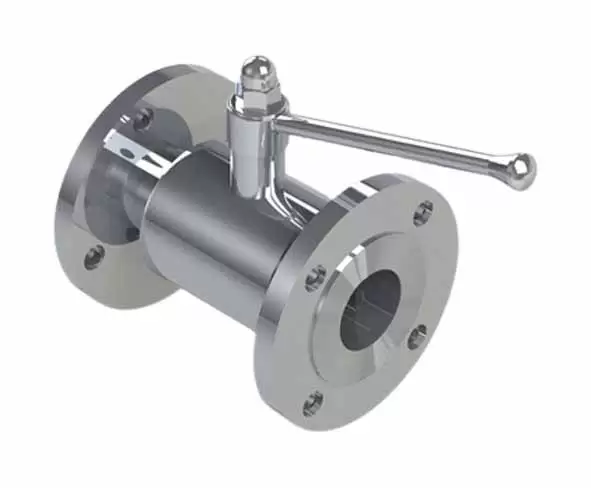
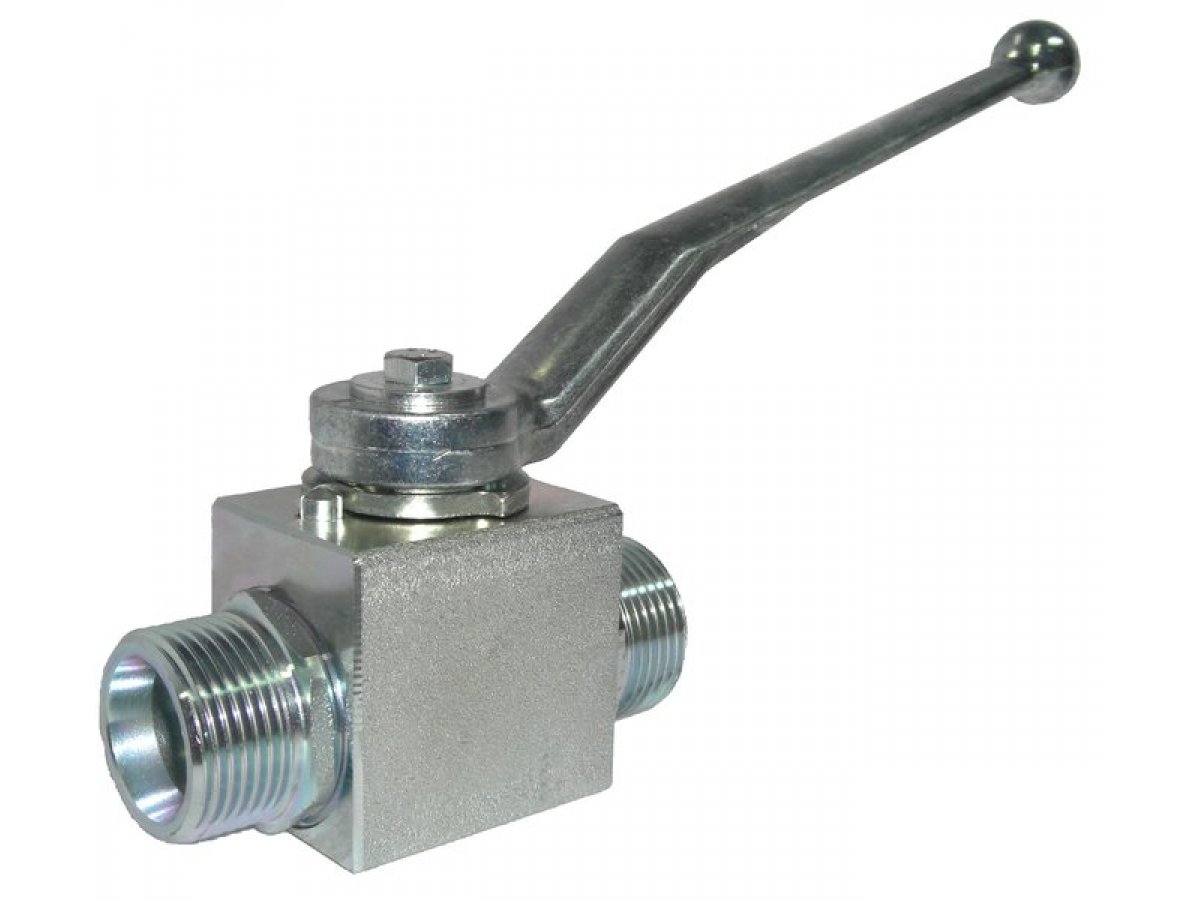
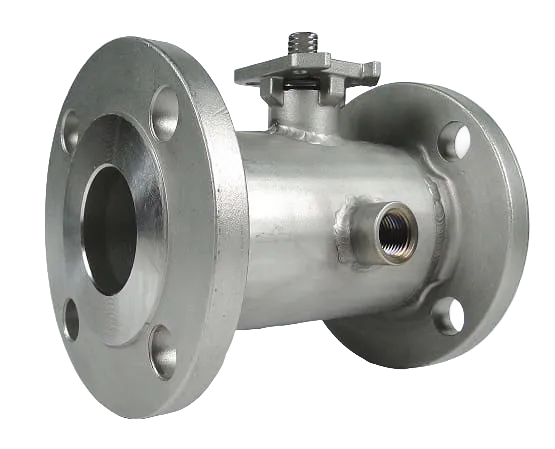
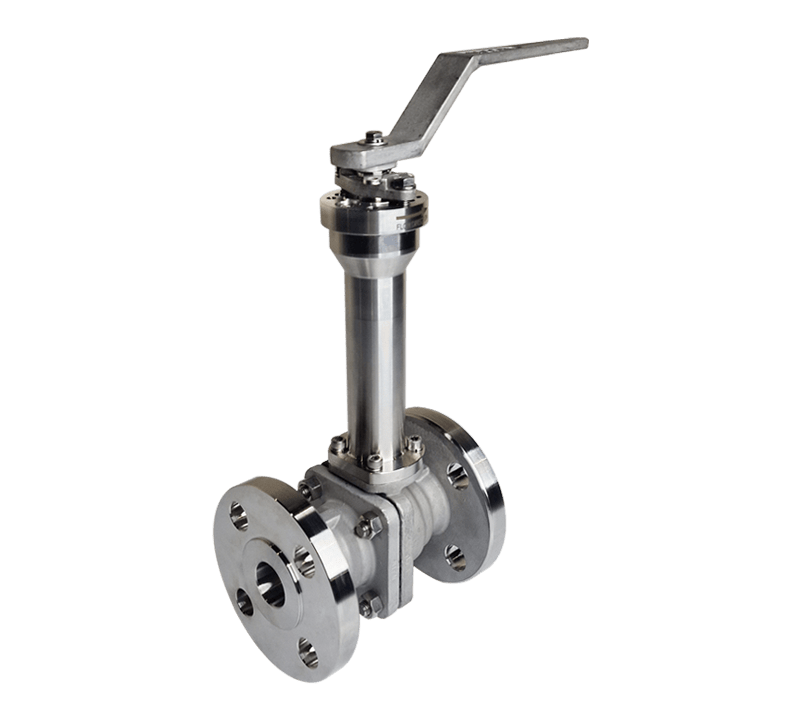
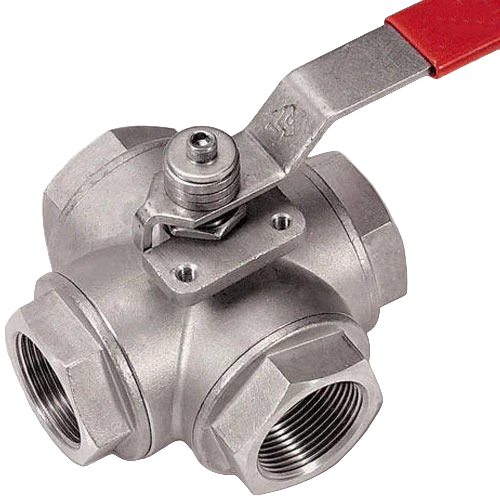
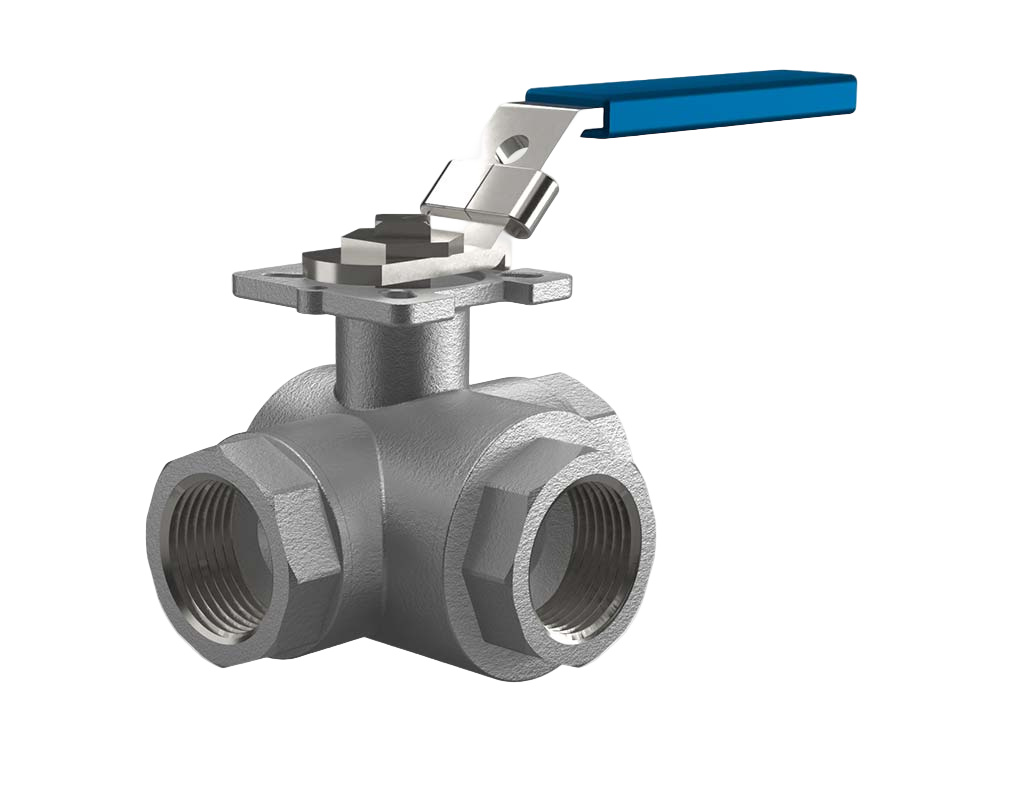
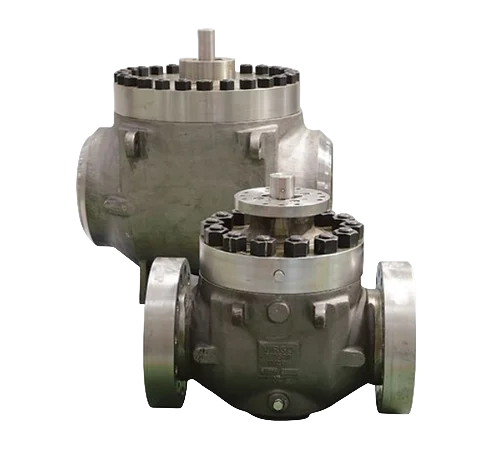
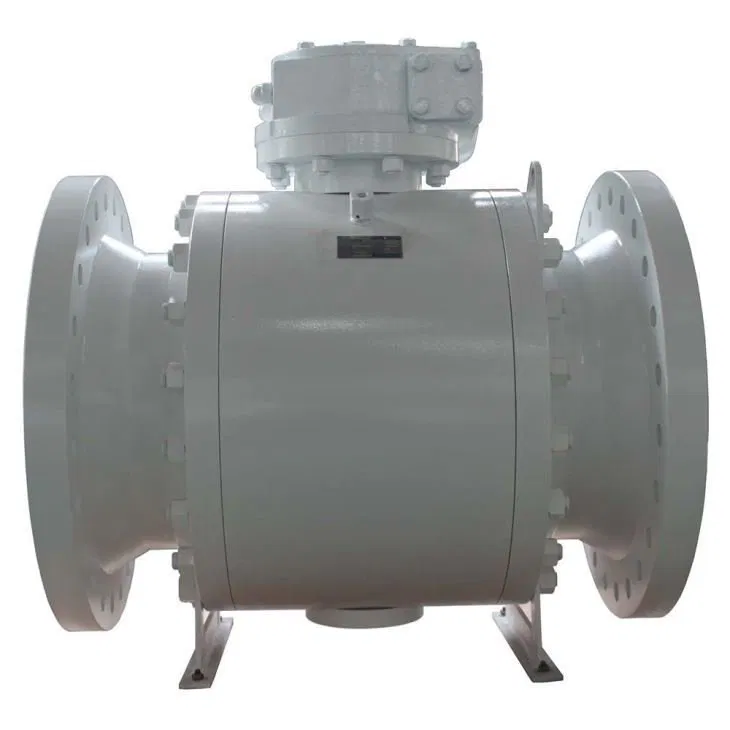
Mechanism: a bored sphere that rotates a quarter-turn to align or block the bore
A ball valve is "named for its round ball that sits in the interior of the valve body and pushes into a seat to control or provide on/off functions in fluid pipelines," and it works "by rotating a ball with a central bore or port that allows or obstructs flow." "When the cross-section of the bore is perpendicular to the direction of flow, the valve halts fluid passage. Conversely, when the bore is aligned with the flow direction, it permits the fluid to pass through." The catalogue's two main families seal differently: in a floating design, "the ball is riding snugly between two seats… the force of the fluid acts on the ball to push it into the seat located in the downstream valve body," while a trunnion design "is held in the body via a trunnion… and by the stem at the top," so "the seat must float to the ball instead" — the mechanical reason trunnion valves handle the catalogue's higher pressure classes at lower operating torque.