Y-Type & Process Valves
Process valves including Y-strainers, flush bottom and pinch valves for industrial services.
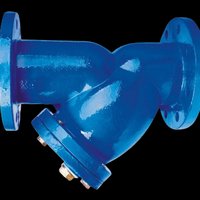
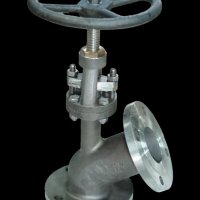
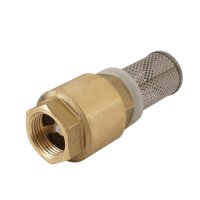
Y-strainers, Y-pattern globe valves, flush-bottom tank valves and sampling valves from Indian manufacturers in cast iron, carbon steel and stainless, threaded and flanged.
Sourcing at a Glance
- Standards / Certifications
- ASME B16.34, API 598
Specifying Y-Type and Process Valves: Family, Screen, Materials
The supporting cast of a process line. The families in this hub rarely appear on a process flow diagram's headline, yet they decide how long the headline equipment lives: strainers protect pumps and control valves, Y-globes throttle steam without wasting boiler pressure, flush-bottom valves let reactors drain completely, sampling valves let quality control trust its own numbers. Specify them with the same care as the main valves and the plant runs quieter.
Y-strainers. A Y-strainer holds a cylindrical screen in an angled pocket on the line. Specification is the screen first: perforation or mesh size chosen from the most sensitive equipment downstream, coarse perforations for pumps, fine mesh for control valves, meters and steam traps, and an open-area ratio of at least three times pipe area so the clean pressure drop is small and cleaning intervals are long. Fit a blowdown valve on the pocket cap where the line cannot be stopped for screen removal; orient the pocket downward on liquid lines and horizontal on steam. Bodies come in cast iron for water, WCB for steam and process, CF8M for corrosive duty, with stainless screens as the default in all of them.
Y-pattern globe valves. These carry the globe valve's renewable seat and throttling ability in a body whose seat sits at about 45 degrees, so flow runs nearly straight and pressure drop falls to a fraction of the T-pattern's. They are the steam-line standard for isolation and regulation, common in condensate, blowdown and boiler-feed positions, and available with metal seats and hardened trim for hot service. Specify T-pattern instead where the valve throttles hard near the seat continuously.
Flush-bottom valves. Mounted on a vessel's bottom pad, they eliminate the dead pocket at the drain: disc types lift into the vessel for free-draining products, ram types drive a piston through settled or crystallised material, with jacketed bodies for products that freeze. The vessel pad dimensions and drilling govern everything, so send the nozzle drawing with the enquiry, and state whether opening into the vessel is acceptable for your process.
Sampling valves. Designed dead-space-free so the sample represents the batch, with flush-seated, purgeable and hygienic variants for pharma and food. Specify by connection, product, sample volume and any sterility requirement.
Materials and ratings across the hub. Cast iron for utility water, WCB carbon steel for steam and general process, CF8 and CF8M stainless for corrosive and clean duties; flanged and threaded ends through DN300 typically, rated on ASME B16.34 pressure-temperature curves, with API 598 shop testing applying to the valve families. Indian manufacturers supply all four families for export with test and material certificates.
What to state in the enquiry. Family; size and rating; body and screen or trim material; medium, temperature and debris or settling behaviour; screen opening and open-area ratio for strainers; pattern (disc or ram, jacketed or plain) and pad drawing for flush-bottom valves; end connections; operation; quantity; and testing, certification and packing requirements with destination port.
How Y-Type Process Valves Work
Why the Y shape exists. Put a pocket or a seat at 45 degrees to a pipe run and you get two things at once: the flow keeps moving in nearly a straight line, so pressure drop stays low, and the angled branch gives you a workspace, room for a screen, a seat or a plug, that a straight tee or right-angle body cannot offer as cheaply. Every family in this hub exploits that geometry.
Strainer mechanics. Flow enters the screen cylinder from inside and passes out through the perforations, so debris collects on the inner surface where the blowdown connection or removable cap can reach it. Capture is purely geometric: anything larger than the opening stays. The engineering trade lives in the open-area ratio: a screen with generous free area relative to pipe bore adds little resistance when clean and, as debris builds, its pressure drop rises slowly, extending the interval before cleaning. An undersized or too-fine screen chokes early, and a choked strainer either starves the pump it protects or, in the worst case, collapses and sends its own fragments downstream, which is why screens are specified in stainless and checked against differential pressure. On steam lines the pocket is mounted horizontally so it does not fill with condensate; on liquid lines it points down so debris settles into it.
Y-globe flow behaviour. A conventional globe valve forces flow through two right angles, spending several velocity heads of pressure; the Y-pattern's inclined seat lets flow sweep past with one shallow change of direction. Throttling still happens the globe way, an annular gap between plug and seat whose area varies with stem lift, giving fine control and a seat that can be re-machined or replaced. The angled stem also lets the disc approach the seat with less lateral flow load, helping the valve shut against differential pressure. What the geometry does not change is the physics of severe throttling: flashing condensate and cavitating liquid still erode trim, so hardened facings are specified for continuous near-closed duty on hot service.
Flush-bottom logic. A vessel drained through an ordinary nozzle-and-valve arrangement keeps a cup of product standing between vessel wall and valve seat, and in batch chemistry that cup contaminates the next batch or blocks solid. A flush-bottom valve puts its seat in the plane of the vessel wall. Disc types lift the closure into the vessel, sweeping the outlet clear; ram types drive a piston downward through the seat, mechanically displacing settled cake or crystals, and jacketed versions keep meltable products liquid at the outlet. The choice between them is a statement about the product: free-draining liquids take the disc, anything that settles, cakes or freezes takes the ram.
Sampling without lying. A sample is only worth taking if it represents the batch at the moment of draw. Dead space is the enemy: any cavity between the process and the sample point holds older material that comes out first. Dead-space-free sampling valves seat flush with the wall of the line or vessel, hold no cavity, and drain or purge their passage between draws; sterile variants add steam or gas purge so the path is sanitised before and after.
The common thread. Each family removes a hiding place, for debris, for pressure loss, for stagnant product, and each is specified by describing what must not accumulate: state the debris and screen opening for strainers, the duty profile for Y-globes, the product's settling habit for flush-bottom valves, and the sample integrity requirement for sampling valves, alongside size, rating, material and ends, and the quotation will match the service.
Frequently Asked Questions
- How do I specify the screen on a Y-strainer?
- Two numbers define it: the perforation or mesh size, and the open-area ratio. Choose the screen opening from what you are protecting, never from pipe size: coarse perforated sheet (1 to 3 mm) protects pumps from scale and slag, finer mesh (40 mesh and finer) protects control valves, meters and steam traps. Then check the open-area ratio, screen area to pipe area, ideally 3:1 or better, so clean pressure drop stays low and cleaning intervals stay long. State medium, expected debris, protected equipment and whether a blowdown valve is wanted; stainless screens are standard even in iron bodies.
- When is a Y-pattern globe valve better than a standard globe valve?
- When you need globe-style throttling or positive shutoff but cannot afford the pressure drop of the standard right-angle body. The Y-pattern sets seat and stem at about 45 degrees, so flow runs nearly straight through, cutting the loss to a fraction of the T-pattern's while keeping a renewable seat. It is standard on steam, condensate and boiler feed lines and in blowdown positions where the valve is mostly open. If the valve will sit near closed against heavy differential pressure continuously, the T-pattern with suitable trim remains the safer choice; state the duty in your enquiry.
- Disc or ram type flush-bottom valve, and what should the RFQ state?
- Flush-bottom valves drain vessels with no dead pocket at the outlet. Disc types lift the disc up into the vessel, suiting clean liquids and free-draining slurries. Ram (piston) types drive a plug down through the seat and can push settled or crystallised product clear, chosen for reactors where cake forms; some are jacketed for products that solidify when cool. The RFQ must state the vessel pad size and drilling, the opening direction, the product and its settling habit, temperature and pressure, materials, and actuation if needed. A drawing of the vessel nozzle saves a round of questions.
- What makes a sampling valve different from a small ball valve?
- A ball or plug valve holds a slug of stagnant product in its cavity and delivery pipe, so the first draw is old material and the sample misrepresents the batch. A proper sampling valve is dead-space-free: the sealing point sits flush with the line or vessel wall, the passage drains completely, and variants offer purge or steam connections for sterile duty. Specify the connection, product and viscosity, sample volume and frequency, pressure and temperature, and whether hygienic finish is required. Where sample integrity affects product release, do not substitute a generic small-bore valve.