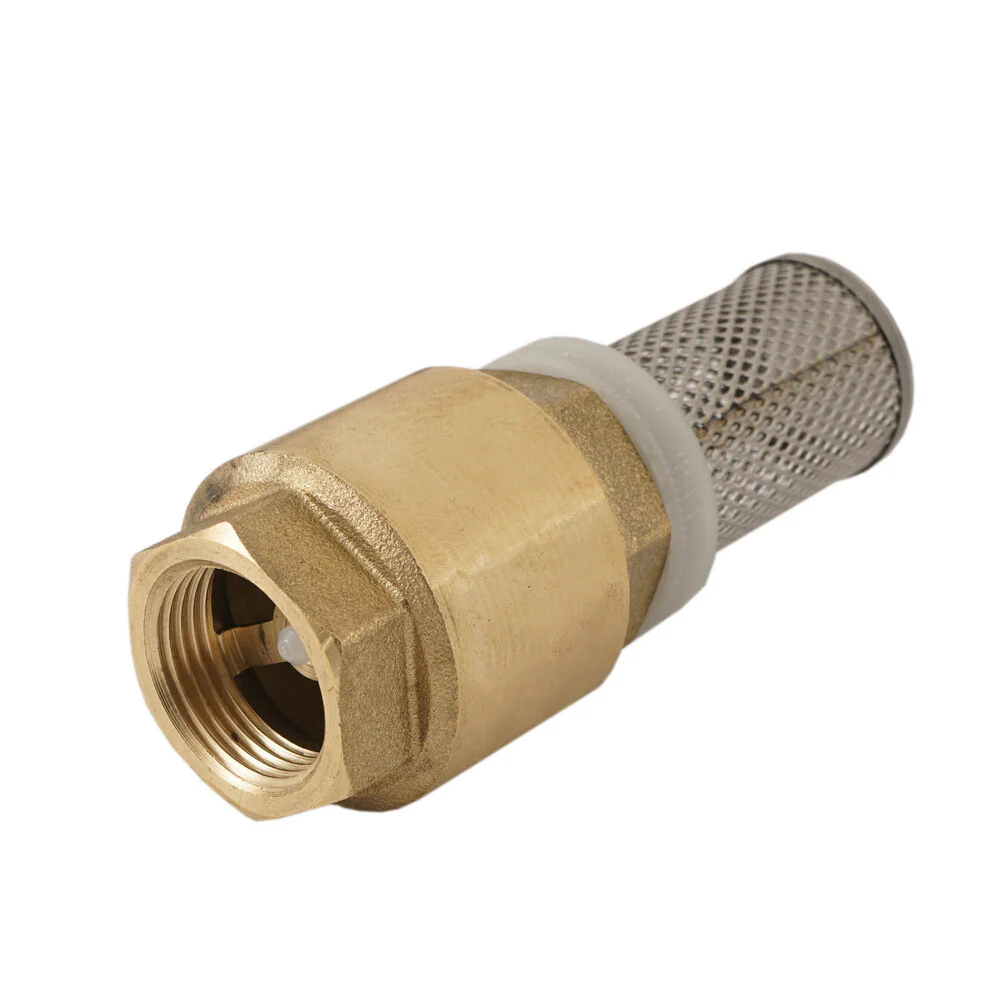
Mechanism: a one-way check valve that traps the suction column the moment the pump stops
A foot valve is "a type of check valve," placed at the pump's wet well or the bottom end of the suction pipe, and deliberately built with a larger flow area than the pipe itself so it doesn't add unnecessary head loss. While the pump runs, the valve stays open and lets fluid pass; the moment the pump stops, "the foot valve for the pump closes, preventing water from flowing out of the pump" and back to source. The closing action itself is mechanical, not powered: "the spring controls the closing speed and cracking pressure of the opening mechanism," and that same disc "is the foot valve's opening/closing mechanism that allows media to enter when the pump operates" and seals again once flow reverses. The strainer built into the valve body is not incidental to this — keeping the pump primed only matters if debris hasn't also been pulled into the same opening the valve is protecting.