Solenoid Valves
Electrically operated valves providing fast, remote fluid switching in automation systems.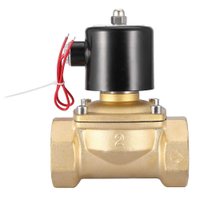
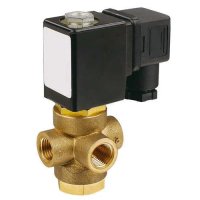

Solenoid valves across 5,376 listed configurations — 2/2-way normally closed and normally open, 3/2-way, DN8 to DN50, with NBR, FKM, EPDM or PTFE seals. Compare options and submit an RFQ.
Sourcing at a Glance
- HS Code(s)
- 8481.80 (six-digit; 8-digit ITC-HS pending CHA confirmation)
- MOQ Range
- Quoted per order
- Sample Lead Time
- Quoted per order
- Production Lead Time
- Quoted per order
- FOB Basis
- Quoted per order
- Standards / Certifications
- EN 161, IEC 60529 (coil enclosure IP rating)
Specifying Solenoid Valves: Function, Actuation, Coil and Seal
Four decisions, in order. A solenoid valve specification resolves in this sequence: function (how many ports, what the de-energised state is), actuation (direct or pilot), fluid compatibility (body and seal), and electrical (voltage, enclosure, area classification). Get the first two wrong and the valve will not operate; get the second two wrong and it will not last.
Function. The catalogue lists 2/2-way normally closed, 2/2-way normally open and 3/2-way configurations. A 2/2 valve simply opens or closes one line. A 3/2 valve switches between two paths or vents the outlet to atmosphere — which is what makes it the standard pilot for single-acting pneumatic actuators. The de-energised state is a safety decision, not a convenience: state which position the process must fall to on power loss.
Actuation and the differential trap. Direct-acting valves need no pressure differential and work down to zero; pilot-operated valves borrow line pressure to move a diaphragm, which is why they can serve larger orifices on modest coils — and why they stall if the line differential drops below the maker's stated minimum. In the listed range this maps directly to size: direct-acting is available only at DN8–DN15; DN20 and above is pilot-operated throughout. Dead-headed lines, vacuum service and gravity-fed tanks are where this bites.
Size and rating. Listed sizes run DN8 to DN50 across 5,376 configurations, at a 1000 WOG rating. End connections are threaded throughout — there is no flanged solenoid option in the listed range. Note that WOG (water-oil-gas) is a cold-working-pressure rating, so the working limit falls as temperature rises.
Body and internals. Brass CW617N covers general water, air and oil duty; SS316 and SS304 bar (A479) serve corrosive, hygienic and washdown environments; aluminium LM6/A413 addresses weight-sensitive air service. Internals across the listed range use an SS430 magnetic core in an SS304 tube.
Seals against media. NBR, EPDM, FKM and PTFE are the listed seal materials. The standard traps: EPDM is excellent on hot water and steam but is attacked by petroleum oils; NBR is the reverse; FKM handles hydrocarbons and heat but is poor on hot water and steam; PTFE gives the widest chemical coverage with the least resilience. Specify the medium, its concentration and its temperature — not just "chemical".
Electrical and area classification. Listed coil voltages are 230 V AC 50 Hz, 110 V AC 50/60 Hz, 24 V DC and 12 V DC. Listed enclosures are IP65 standard, IP67 weatherproof and Ex d IIC flameproof. IP codes are defined in IEC 60529 — the first digit is solids ingress, the second is water — and EN 161 requires the manufacturer to declare that degree for gas-service valves. For classified areas, the Ex marking, gas group and temperature class all belong in the enquiry, not just the phrase "explosion proof".
Gas service. EN 161 governs automatic shut-off valves for gas burners and gas appliances, covering gaseous fuels at declared maximum inlet pressures up to 500 kPa and nominal connection sizes to DN 250; its 2025 amendment clarifies application to electrically actuated valves. If the duty is fuel gas, state it explicitly — the certification path differs from general process service.
Import conformity. CE marking for the EU per the applicable directives, SABER for Saudi Arabia, ECAS for the UAE, with EN 10204 3.1 material certificates as the common EU procurement baseline.
From spec to RFQ. State: medium and temperature, line pressure and minimum differential, port configuration, de-energised state, DN, body material, seal material, coil voltage, enclosure and area classification, and destination market. Share the line schedule or control philosophy with the RFQ and the configuration is matched against the catalogue directly.
Frequently Asked Questions
- Normally closed, normally open or 3/2-way — which configuration do I need?
- Normally closed valves stay shut without power and open when energised — the default for most process and safety duties, because loss of power isolates the line. Normally open valves stay open unpowered, used where flow must continue during a power failure. 3/2-way valves have three ports and two positions, switching flow between paths or venting a downstream line — the usual choice for driving single-acting pneumatic actuators. All three are listed catalogue configurations. State the required de-energised state in the enquiry.
- Direct-acting or pilot-operated?
- Direct-acting valves work from zero pressure differential because the coil moves the seat itself — specify them for vacuum, low-pressure or dead-headed lines. Pilot-operated valves use line pressure to shift a diaphragm, so they handle larger orifices on a smaller coil but require a minimum differential (typically stated by the maker) to operate. Both are listed, but direct-acting is confined to DN8–DN15 in the current range; above DN15 the catalogue is pilot-operated throughout, so a low- or zero-differential duty above DN15 needs to be raised at enquiry stage. If your line can sit at low or zero differential, say so explicitly — it is a common cause of a solenoid valve failing to open in service.
- Which coil voltage and enclosure should I specify?
- Listed coil voltages are 230 V AC 50 Hz, 110 V AC 50/60 Hz, 24 V DC and 12 V DC; listed enclosures are IP65 standard, IP67 weatherproof and flameproof Ex d IIC. Match voltage to your control system and enclosure to the installation: IP65 for indoor panels, IP67 where washdown or weather exposure applies, Ex d IIC for classified hazardous areas. IP ratings are defined by IEC 60529, which EN 161 requires the maker to declare.
- Which seal material suits my medium?
- Match the elastomer to the fluid first: NBR for water, air and mineral oils; EPDM for hot water, steam and many chemicals but not petroleum oils; FKM (Viton) for hydrocarbons and higher temperatures; PTFE where broad chemical resistance is needed. All four are listed seal materials. State the medium and its temperature in the enquiry — elastomer compatibility, not valve size, is what usually decides the model.
- Brass, stainless or aluminium body?
- Brass (CW617N) is the general-purpose body for water, air and oil at lower cost; SS316 and SS304 machined from bar suit corrosive media, washdown environments and hygienic installations; aluminium (LM6/A413) is used where weight matters, typically on air service. Choose the body for the medium and the surrounding environment together — in chloride-rich coastal atmospheres, external attack on a brass body can become the limiting factor before the wetted surface does.
- Are these valves suitable for gas service, and what conformity applies?
- Gas-burner and gas-appliance duty is governed by EN 161, which covers automatic shut-off valves for gaseous fuels at declared inlet pressures up to 500 kPa and connection sizes to DN 250, and requires the maker to declare the enclosure protection degree per IEC 60529. For export orders, CE marking for the EU, SABER for Saudi Arabia and ECAS for the UAE are confirmed at RFQ stage. State the gas type, inlet pressure and destination market in the enquiry.
Last verified: 6 August 2026
Request a Quote for Solenoid Valves