Home›
Solenoid & Automation Valves
Solenoid & Automation Valves
Electrically operated valves providing fast, remote fluid switching in automation systems.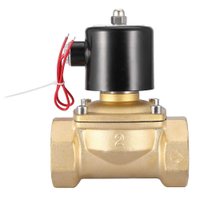
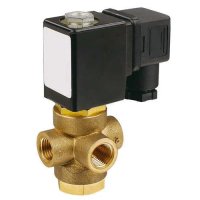

Frequently Asked Questions
- How do I choose between 2-way, 3-way and 4-way solenoid valves?
- It depends on the job. A 2-way solenoid simply turns one flow path on or off (dosing, isolation, media on/off). A 3-way solenoid has three ports and can divert flow, vent a line, or pilot a single-acting (spring-return) actuator — the most common process-automation duty. A 4-way / 5-port valve provides pressure and exhaust to both sides of a double-acting cylinder or actuator, reversing its motion. For piloting pneumatic on/off valves you generally choose 3/2 (spring-return actuator) or 5/2 (double-acting actuator), often NAMUR-mounted.
- What's the MOQ for solenoid valves?
- It depends on type. Standard commodity 2-way and NAMUR pilot solenoids (brass/aluminium, IP65): typical MOQ starts at 50–200 pieces depending on manufacturer and configuration. Explosion-proof ATEX/IECEx or special-material valves are more engineered, so smaller batches of 20–100 pieces are usually workable. Mixed-configuration orders consolidated under one package accept smaller quantities per line item.
- Are explosion-proof (ATEX/IECEx) solenoid valves available?
- Where specified, yes. Partner manufacturers supply solenoid valves with weatherproof IP65/IP67 coils for general duty, and ATEX/IECEx explosion-protected coils — flameproof Ex d, encapsulated Ex m, or intrinsically safe Ex ia — for Zone 1/2 gas and dust hazardous areas. SIL-suitability documentation and NACE MR0175 wetted metallurgy can be arranged where the duty requires it. Certificates of conformity ship with the valves.
- How is the coil, voltage and Ex rating specified?
- Because solenoid valves are electrically actuated, configuration centres on coil voltage and supply (commonly 24 VDC or 110/230 VAC at 50/60 Hz), duty cycle and power, the function and rest state (2/3/4-way, normally closed or normally open), and the enclosure/Ex rating (IP65/IP67 vs ATEX/IECEx Ex d/Ex m/Ex ia). Connector type (DIN 43650, flying leads or terminal box), manual override, and seal material (NBR/FKM/EPDM/PTFE) are selected for the media and environment.
- Which end-client approvals do your MSME partners hold?
- A subset of Himalay's partner network holds approvals from Shell, ExxonMobil, BP, TotalEnergies, Aramco, ADNOC, PDO, QatarEnergy, KOC, and ONGC, and/or ATEX/IECEx product certifications. Share your end-client AVL at inquiry stage and we match a qualified partner; audits can be arranged on a supplier-development track.
- How long does a solenoid valve order take?
- Standard catalogue solenoid and NAMUR pilot valves: roughly 4–6 weeks to manufacture and test, then freight. ATEX/IECEx explosion-proof or special-material valves: typically 8–12 weeks depending on certification and metallurgy. Full CIF to Rotterdam, Antwerp, Jebel Ali or Dammam: typically 8–12 weeks door-to-door for standard items, 14–20 weeks for engineered specials.