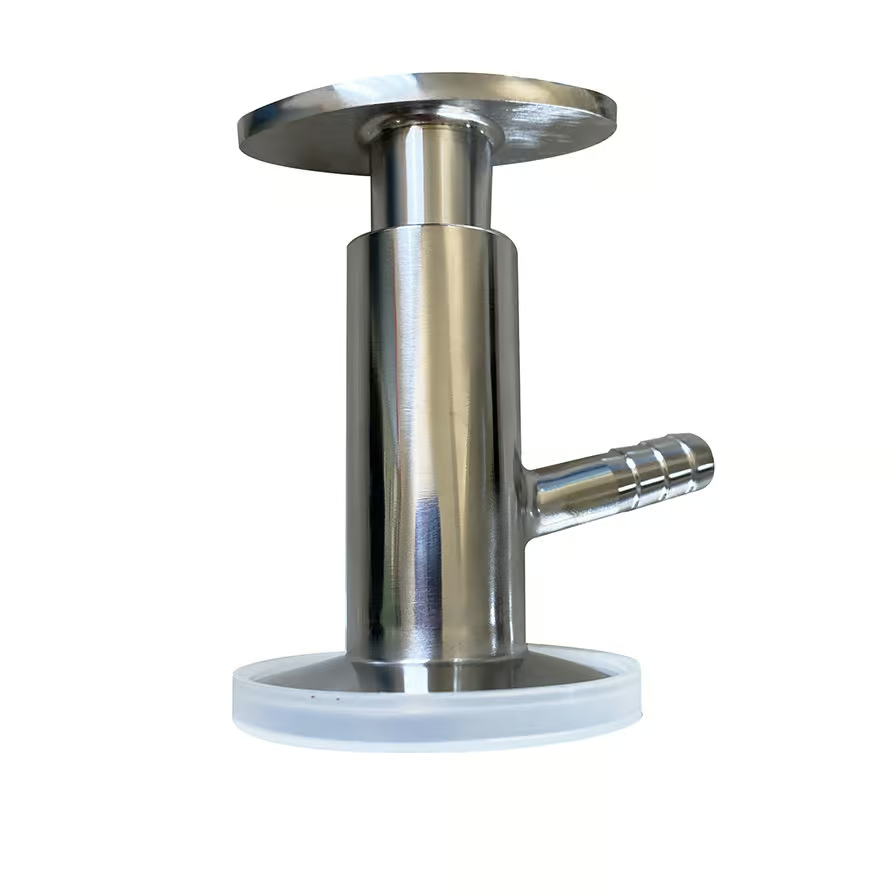
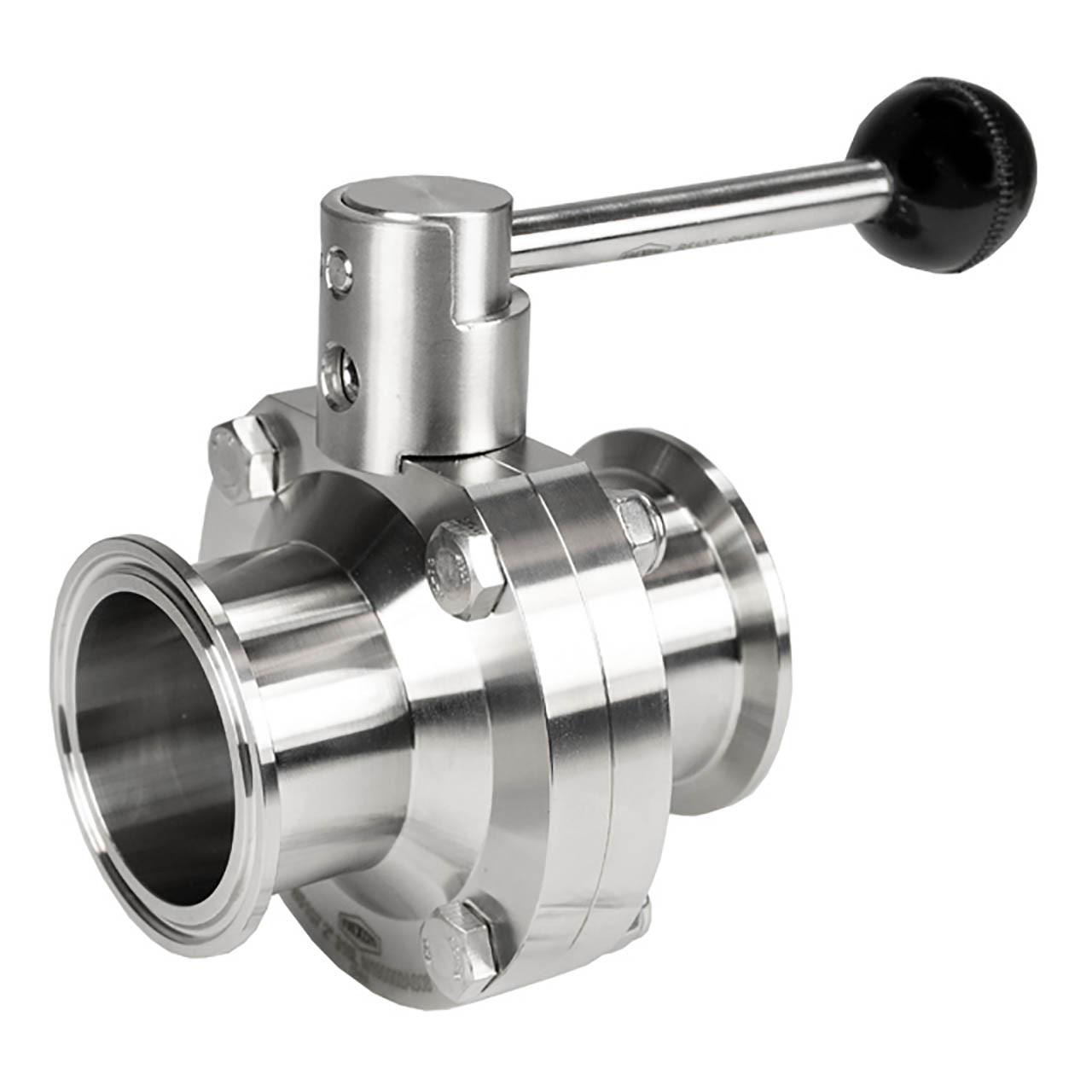
The problem is not flow, it is residue
Any competent valve stops flow. A sanitary valve must also present no place where product lingers, because a film of milk or a pocket of broth in a crevice becomes a bacterial culture between cleaning cycles, and in pharma a trace of the last batch is contamination of the next. Every design feature of hygienic valves, and most of their cost, answers this one problem.
Surface physics
Bacteria and product films anchor in surface roughness. Polishing product-contact steel to a low Ra value leaves fewer and shallower anchoring sites and lets cleaning solutions shear residue away; electropolishing goes further by smoothing microscopic peaks electrochemically and enriching the passive chromium oxide layer. This is why finish is specified numerically and certified, and why a rough weld bead inside a polished body genuinely matters: the whole flow path is only as cleanable as its roughest patch.
Geometry: crevices and dead legs
Threads, sharp corners, gasket gaps and instrument tees create spaces where circulating cleaning fluid moves too slowly to scour. Hygienic valves therefore use clamp or union connections with controlled gasket compression instead of threads, radiused internal corners, and bodies designed to drain completely by gravity, a weir diaphragm valve installed at the recommended angle empties itself, where a horizontal ball valve cavity holds a ring of product indefinitely. Cavity-filled ball seats exist precisely to occupy that ring of space.
Why the diaphragm valve rules high purity
In a diaphragm valve the flexible membrane is the only moving part the product ever touches; stem, compressor and bonnet stay on the dry side. There is no stem seal exposed to product, no packing to shed, and the sealing action, membrane pressed onto a smooth weir, has no sliding contact to generate particles. The membrane is also the sacrificial element: elastomer grades fatigue with steam cycles and flexing, so it is inspected and replaced on schedule, a maintenance model pharma prefers because the wear part is visible, cheap and product-side only.
Cleaning and sterilising in place
CIP circulates caustic, acid and rinse water at velocity and temperature through the assembled line; SIP follows with steam, commonly at 121 to 135 degrees C. The valve must tolerate the chemistry (elastomer choice), the temperature cycling (membrane and seat life), and the mechanics of cleaning, opening partially or fully so solutions reach seating surfaces. Elastomer selection is thus a three-way match between product, cleaning chemistry and temperature, and the single most frequent cause of premature sanitary valve maintenance is a gasket grade chosen for the product but not the CIP acid.
Failure modes worth knowing
Membrane fatigue and pinholing in diaphragm valves, announced by weep holes in the bonnet if the design has them; liner swelling and disc drag in butterfly valves when the elastomer and product disagree; rouging, a thin iron oxide film, in high-purity water systems, managed by material grade and periodic derouging; and gasket extrusion at clamp joints from over-tightening, which creates exactly the crevice the joint was designed to avoid. All are managed by specification and scheduled replacement rather than by heavier construction.
What this means at enquiry time
State product, cleaning chemistry and temperatures, finish requirement, elastomer grade and end standard, and the valve that arrives will clean as well as it seals, which in this segment is the entire point.