• Homeβ€Ί
  • Sampling Valves
  • Sampling Valves

    Source sampling valves from India's verified manufacturers and exporters on Himalay. Browse the full range for industrial and export applications.

    Showing 1 items
    1 items
    operation type
    Manual
    body material
    SS304
    SS316L
    end connection
    Threaded
    Tri-Clamp
    seat material
    EPDM
    PTFE
    trim material
    SS316L
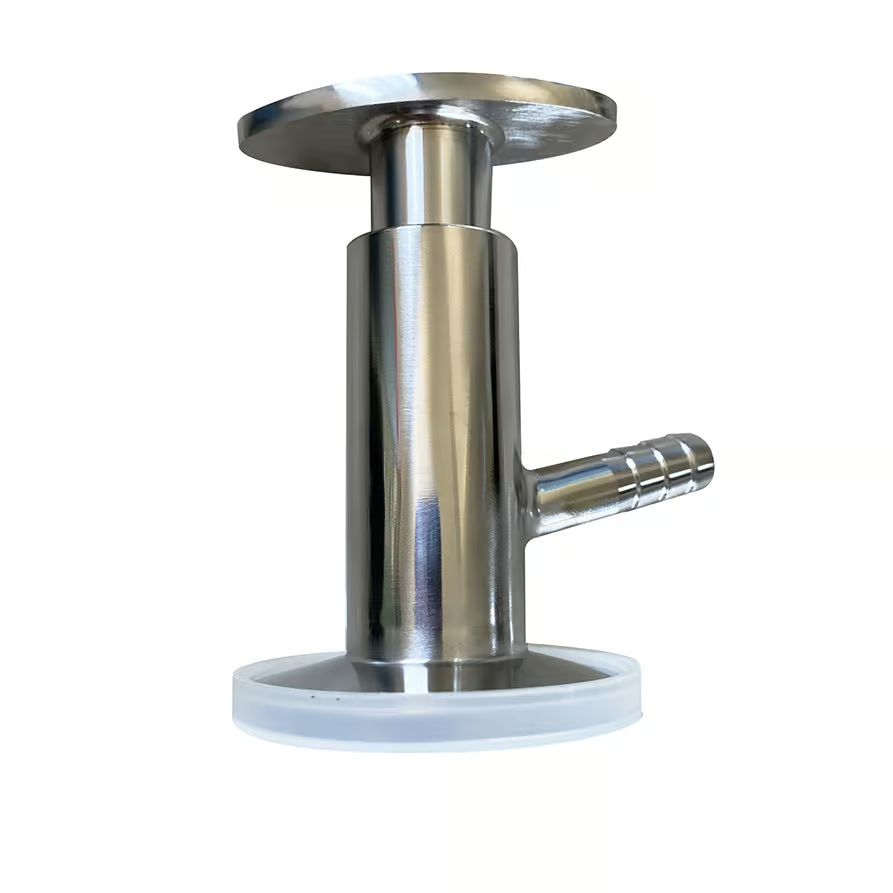
    Sampling Valve
    Sampling Valve$20 - $120
    Sampling Valves sourcing

    About Sampling Valves

    Sampling valves for aseptic and process sample points in piston, needle and membrane designs, dead-leg-free, in 316L stainless steel with steam-sterilisable options.

    A sampling valve draws a small, representative quantity of process fluid from a line, reactor or tank without interrupting the process or exposing the operator and product to contamination. In hygienic industries β€” pharmaceuticals, biotech, dairy, beverage β€” the defining requirements are a dead-leg-free connection to the process, crevice-free wetted surfaces, and the ability to sterilise the sample path with steam or flush it between samples; piston and membrane (diaphragm) sampling valves welded directly into the line or tank wall are the standard designs, built in 316L stainless steel with electropolished contact surfaces, EPDM or PTFE seals, and design practice aligned to ASME BPE, 3-A and EHEDG. In chemical and general process plants, sampling points use needle or ball-type sample valves, often as double-block arrangements with a fixed-volume chamber so the operator receives a controlled dose of hazardous liquid into a closed container, with materials from 316 stainless to alloy 20 and Hastelloy for aggressive media. Sizes are small β€” typically DN8 to DN25 sample paths on DN25 to DN100 process connections β€” and pressure ratings follow the parent line, with ASME B16.34 materials practice and API 598 style testing where specified. When enquiring, state the process fluid, temperature and pressure, hygienic or industrial duty, connection type (weld-in, Tri-Clamp, flanged), seal materials, sterilisation method, sample volume and actuation.

    Buyer guide

    Specifying Sampling Valves: Duty Class, Design and Sterilisation

    01

    What the valve is actually for

    A sampling valve exists so that the sample you analyse is the fluid in the process β€” not a stagnant remnant from the last sample, not a contaminated dribble, not a hazard running down an operator's glove. Every design feature follows from representativeness and containment, and the right valve depends first on duty class: aseptic, hygienic-industrial, or hazardous-chemical.

    02

    Aseptic and hygienic designs

    The piston sampling valve seats a polished piston flush with the vessel or pipe wall; opening retracts it and product flows through a short body to the sample outlet. The membrane type replaces the sliding piston seal with a flexed membrane so no dynamic seal touches product. Both weld into tank pads or line fittings, or mount on Tri-Clamp ferrules, and both accept steam sterilisation of the sample path before and after sampling β€” specify steam connections if you will SIP in place. Bodies are 316L with internal finishes typically Ra 0.5 micron or better, electropolished on request; seals EPDM, silicone or PTFE. Design practice aligns with ASME BPE for pharma and 3-A or EHEDG for dairy and food, and buyers audited to those regimes should say so in the enquiry so documentation matches.

    03

    Industrial and hazardous designs

    For utilities and non-critical chemistry, needle-pattern sample valves with fine flow control are sufficient and cheap. For toxic, volatile or pressurised media, specify closed sampling systems: a fixed-volume chamber filled between two block seats, then drained to a closed bottle or cylinder, with purge ports so the operator can clear the path before disconnecting. In-line retractable samplers serve slurries and polymers that would block a small branch.

    04

    Materials

    316L covers most duties; alloy 20 for sulphuric acid ranges, Hastelloy C-276 for chlorides and mixed acids, PTFE linings and seals for broad compatibility. Match the sample path metallurgy to the parent line, not below it.

    05

    Pressure, size and connections

    Sample paths run DN8 to DN25; ratings follow the parent system, PN16 through Class 300 being typical, with ASME B16.34 materials practice and API 598 style shell testing where the purchaser requires formal testing. Connections: weld-in pads, Tri-Clamp per hygienic pipework, flanged or threaded for industrial points.

    06

    Operation

    Manual levers and handwheels dominate; pneumatic actuation suits automated or frequent sampling and lets the control system log sample events. Spring-return-closed actuation is worth specifying on hazardous duties.

    What to state in the enquiry

    Duty class, fluid and conditions, sterilisation or cleaning regime, process and sample connections, materials and finish with certification (EN 10204 3.1, surface finish reports, BPE/3-A/EHEDG alignment), sample volume, actuation, quantity and delivery. Indian manufacturers supply both hygienic and hazardous-duty sampling valves for export with full documentation packages and can propose designs from a P&ID extract.

    Submit an enquiry β†’
    Technical guide

    How Sampling Valves Work

    The core problem is the first millilitre

    Any sample point holds a small volume between the process and the outlet. Whatever sat in that volume β€” yesterday's product, condensate, cleaning solution β€” comes out first and lands in your sample bottle. Ordinary valves make this worse with cavities and threads; sampling valves are engineered to make the held volume as close to zero as possible and to make what remains cleanable or flushable.

    Flush-seat piston mechanics

    In a piston sampling valve the piston's polished tip is the process boundary, seated flush with the pipe or tank wall so process flow sweeps it continuously β€” nothing stagnates against it. Opening retracts the piston a few millimetres; product enters the annulus around it and exits the sample port under process pressure. The stroke is short and the internal volume tiny, so after a brief initial purge the stream is representative. The dynamic seal around the piston is the design's critical detail: it must survive product, CIP chemistry and SIP steam, and quality manufacturers specify its elastomer and change interval rather than hiding it.

    Membrane mechanics

    The membrane valve bonds or clamps a flexible PTFE or elastomer membrane over the port; a plunger behind it presses the membrane onto the seat to close and releases it to open. Product touches only body and membrane β€” no sliding interfaces β€” which is why sterility-critical fermentation and injectable-product processes favour it. The trade-off is membrane fatigue: flexing plus repeated steam cycles ages the material, so the SIP frequency you state in the enquiry directly sets the maintenance interval the manufacturer will quote.

    Sterilise-in-place behaviour

    Aseptic sample valves provide auxiliary ports so steam can enter the sample path, kill it, and condensate can drain, before and after each sample. Steam must reach every wetted crevice β€” the reason bodies are crevice-free and self-draining when mounted at the recommended orientation. Buyers should confirm the valve's orientation rules; a perfectly designed valve mounted horizontally with a trapped low point will fail its swab tests.

    Fixed-volume and closed sampling

    For hazardous chemistry the mechanism inverts: instead of minimising the held volume, the valve defines it precisely. Two seats trap a calibrated chamber; the first operation fills it from the line, the second discharges it to the bottle while the line side stays blocked. The operator handles a known dose, vapours vent through a controlled path or scrubber connection, and the line never opens to atmosphere. Needle-vent trims let viscous or gassy fluids discharge smoothly.

    Failure modes

    The recurring ones are seal swell or scorching from unstated CIP/SIP chemistry; blocked sample paths on slurries and polymers (specify retractable or full-bore designs); corrosion of an under-specified body by a concentrated stream that the parent line, being continuously diluted and swept, tolerates; operators leaving piston valves cracked open, cooking product into the annulus; and unsanitary hose barbs contaminating aseptic points downstream of a perfect valve. The specification answers are complete fluid and cleaning disclosure, correct metallurgy, actuated spring-closed operation where discipline is doubtful, and matching the outlet fitting to the actual sampling procedure. State the procedure β€” bottle, bag, cylinder, laboratory requirement β€” in the enquiry and the valve can be built around it.

    Popular searches in Sampling Valves

    Frequently Asked Questions

    Piston or membrane sampling valve for aseptic duty?
    What makes a sample point dead-leg-free and why does it matter?
    How do I sample hazardous chemicals safely?
    What should a sampling valve RFQ contain?