Hygiene drives the mechanism
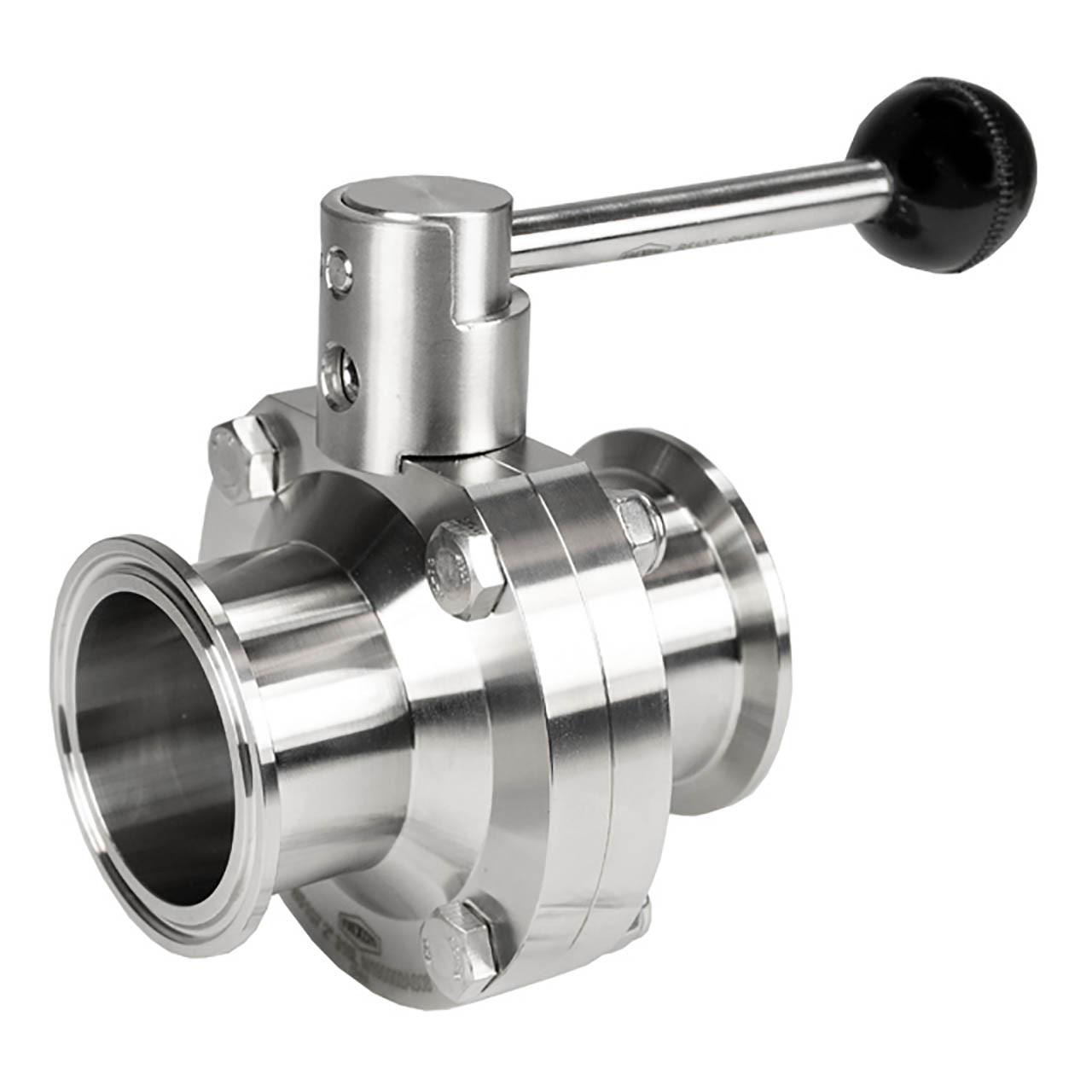
Mechanically, a sanitary butterfly valve is a concentric, resilient-seated valve: a polished disc rotates a quarter turn and its edge compresses into an elastomer seat. What makes it sanitary is that every design decision serves cleanability. The seat is a single moulded element that lines the bore, wraps both body faces and grips both stem stubs, so there is exactly one product-contact polymer part and no pocket where the seat meets the body. The disc has no through-bolts, pins or exposed threads in the product zone; stem drive is by internal square or spline above the seal line. The body splits so the seat can be renewed in minutes, which matters because in hygienic service seats are replaced on schedule, not on failure.
Sealing behaviour
Closure is by interference: the disc edge compresses the elastomer a controlled amount around the full circumference. The same interference seals the stem penetrations, because the moulded seat bosses are squeezed between body halves and stem. There is no gland packing, no external adjustment, and correspondingly no way to compensate a worn seat except replacement, a deliberate trade for crevice-free construction.
Flow and drainability
Open, the disc lies in the stream with its shaft axis across the bore; the slim profile passes CIP flow at the velocities cleaning validation requires, typically 1.5 m/s or more, and the smooth bore leaves no shadowed zones. Installed with the stem horizontal, the bore drains past the disc in either position, one reason installation orientation appears in hygienic design reviews. Butterfly valves cannot separate two fluids with a leak-detection barrier; where product must be safeguarded against CIP fluid across a single seal, plants step up to double-seat mixproof valves, and the butterfly then serves as routing and isolation within one circuit.
What CIP and SIP do to the valve
Cleaning cycles swing the seat from cold product to hot caustic, acid and rinse water, and sterilisation adds saturated steam. Each swing cycles the elastomer thermally and chemically, causing gradual compression set: closing torque falls, the seat surface glazes or cracks, and eventually the disc edge shows through as a seepage path. Fats and oils accelerate this in EPDM; hot caustic accelerates it in FKM. This is why seat compound selection weighs the cleaning regime as heavily as the product, and why hygienic maintenance schedules seat renewal by cycle count or months in service.
Failure modes that matter
Seat extrusion at the body split line from over-clamped installation, disc-edge scoring from crystalline or fibrous product, swollen seats that raise operating torque until actuators stall, and biofilm behind a cracked seat that survives CIP. Surface finish matters for the same reason: above roughly Ra 0.8 µm, soils anchor faster than validated cleaning removes them. Every one of these mechanisms is controlled by specification, elastomer, finish, connection standard and certification, which is why hygienic buyers write more detail into an RFQ for this simple valve than for many larger process valves.