Plug valves across 720 listed configurations — PTFE-sleeved and lubricated types, DN50 to DN300, ASME 150 to 600, in carbon steel, stainless and ductile iron. Submit an RFQ.
Sourcing at a Glance
- HS Code(s)
- 8481.80 (six-digit; 8-digit ITC-HS pending CHA confirmation)
- MOQ Range
- Quoted per order
- Sample Lead Time
- Quoted per order
- Production Lead Time
- Quoted per order
- FOB Basis
- Quoted per order
- Standards / Certifications
- API 599, ASME B16.34
Specifying Plug Valves: Construction, Seat and Pressure Class
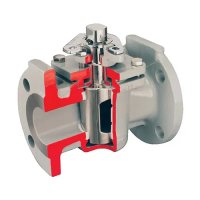
The full-contact seal. A plug valve closes with a tapered or cylindrical plug seating over its whole bored passage against the body — one continuous sealing surface, unlike a ball valve's separate upstream and downstream seat rings. That geometry is what makes plug valves resist fouling from fibrous or particulate media: the plug tends to self-clean on each stroke rather than trapping solids at a seat interface.
Two constructions, two trade-offs. Sleeved PTFE plug valves line the body and plug with PTFE, giving low and stable operating torque with no periodic maintenance — the general-purpose choice within PTFE's temperature and pressure envelope. Lubricated plug valves use injected sealant between plug and body to maintain the seal, extending the practical range to higher pressures and temperatures at the cost of ongoing lubricant top-up. The choice is rarely aesthetic — it is set by whether the duty sits inside or outside PTFE's working envelope.
Size and rating. DN50 to DN300 across 720 configurations, in ASME 150, 300 and 600. End connections are flanged or butt-weld.
Materials. Carbon steel A216 WCB and WCC cover general process service; SS316 and SS304 handle corrosive duty; ductile iron serves lower-pressure water and utility applications. Trim on catalogue plug valves is described as matching the body material — the plug itself is generally the same alloy family as the body, with the seal provided by the PTFE sleeve or lubricant film rather than a separate hard-faced trim.
Where plug valves win over ball valves. Full-contact seating handles fibrous, particulate and light-slurry media better than a two-seat ball valve, and plug valves typically offer a shorter face-to-face at equivalent size — relevant where space is constrained. The trade-off is generally higher operating torque than an equivalent ball valve, since the full plug surface bears against the body rather than a ball touching only its seats.
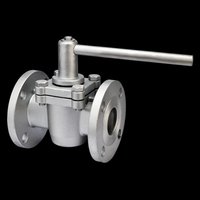
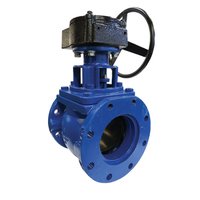
Operation. Manual lever suits smaller valves and quick operation; manual gear extends practical hand operation into larger, higher-torque sizes. Neither pneumatic nor electric actuation appears in the current listed range — state your automation requirement in the enquiry if actuated operation is needed.
Standards. API 599 governs metal plug valves — flanged, threaded and welding ends, lubricated and non-lubricated, including sleeved and hard-faced linings — while ASME B16.34 supplies the pressure-temperature ratings behind each class.
Conformity. PED 2014/68/EU category and module with CE marking for the EU, SABER for Saudi Arabia, ECAS for the UAE, NACE MR0175 for sour service, EN 10204 3.1 certificates as the EU procurement baseline.
From spec to RFQ. State medium and solids content, size, pressure class, body material, construction type (sleeved or lubricated), operation, and destination market. Share the line spec with your RFQ and the configuration is matched against the catalogue directly.
How Plug Valves Work
Mechanism: a full-bore plug that rotates ninety degrees and seals on contact rather than at two separate seats. A plug valve's core is a cylindrical or conical plug with one or more passageways bored straight through it — "the plugs in plug valves have one or more hollow passageways going sideways through the plug, so that fluid can flow through the plug when the valve is open." Turning the stem swings that passage in or out of line with the body ports: "the plug is rotated a fourth of a full turn to change from open to shut positions," which is what makes the design a quarter-turn valve. The pressure boundary is simpler than a globe or gate valve's, too — "plug valves usually do not have bonnets," with the stem and plug top largely exposed rather than enclosed under a separate bonnet joint. Himalay's listed range builds on that same mechanism in two sealing variants: PTFE-sleeved, where a liner does the sealing work, and lubricated, where injected sealant maintains the seal between plug and body.
Industries served: wherever solids-bearing or abrasive flow needs a full-contact shutoff. A plug's full face bearing against the body, rather than a ball touching two narrow seat rings, is what puts the design to work "extensively... in pump stations, wastewater treatment plants, lift stations and collections systems and in water treatment plants and distribution networks." The same trade-publication source reports the valves "work well handling abrasive slurries, viscous chemicals and other challenging fluids" across "chemical processing, pulp and paper and food and beverage production," and that "in environments such as power plants and mining operations, [they] deliver high performance under demanding pressures and abrasive conditions." These are general usage patterns reported for the plug-valve design family, not a record of this catalogue's own sales mix.
Standards landscape: a petroleum-industry design standard, paired with a separate ratings code. API 599 "specifies the requirements for quarter-turn metal plug valves, including the lift plug type, for petroleum, petrochemical, and industrial applications," covering steel, nickel-base and other alloy plug valves with flanged or butt-welding ends from DN15 to DN900, plus "lubricated and non-lubricated plug valves that have two-way coaxial ports" — three-way and four-way designs are explicitly excluded from its scope. The pressure-temperature ratings behind each class come from a second document: ASME B16.34 "covers pressure-temperature ratings, dimensions, tolerances, materials, nondestructive examination requirements, testing, and marking" for flanged, threaded and welding-end valves in steel and alloy construction, and is written to be "used in conjunction with equipment described in other volumes of the ASME B16 Series." Between the two, API 599 fixes what the valve is and how it is built; ASME B16.34 fixes what pressure and temperature it is rated to hold. Sources: [Wikipedia — Plug valve](https://en.wikipedia.org/wiki/Plug_valve); [Valve Magazine — The Eccentric Plug Valve](https://valvemagazine.com/articles/the-eccentric-plug-valve/); [BSB Edge — API STD 599:2025 scope](https://www.bsbedge.com/standard/metal-plug-valves-flanged-threaded-and-welding-ends-api-std-599-2025/API-STD-599-2025); [ASME — B16.34 Valves, Flanged, Threaded and Welding End](https://www.asme.org/codes-standards/find-codes-standards/b16-34-valves-flanged-threaded-welding-end)
Frequently Asked Questions
- Sleeved PTFE or lubricated — which plug valve should I specify?
- Sleeved PTFE plug valves are maintenance-free — the PTFE lining gives a low, stable operating torque without periodic sealant injection, and is a common choice for general isolation and slurry-tolerant service. Lubricated plug valves rely on injected sealant to maintain the seal and ease operation, which suits larger or higher-pressure valves where a PTFE sleeve's temperature and pressure limits would be exceeded, but requires ongoing lubricant maintenance. Both are listed catalogue types. State size, pressure class and whether ongoing maintenance is acceptable.
- When does a plug valve beat a ball valve for the same duty?
- Where the medium carries fibres, particulates or light slurry, a plug valve's full-contact seating tends to wipe the seat clean on each stroke, while a ball valve's separate upstream and downstream seats can trap solids between ball and seat. Plug valves also give a shorter face-to-face than many ball valve designs at the same size. State the solids content of your medium — that, more than pressure or temperature, is what favours a plug valve over a ball valve.
- Which body and seat combination suits my service?
- Carbon steel (WCB/WCC) covers general process duty; SS316 and SS304 handle corrosive service. A PTFE sleeve gives the widest chemical resistance and lowest torque for the sleeved type; the lubricated type's metal-to-metal seal, maintained by sealant, tolerates higher temperature and pressure than PTFE allows. State medium, temperature and pressure together — these determine which construction is viable before body material is even considered.
- What conformity documentation applies for EU, Saudi and UAE imports?
- EU-bound pressure equipment is categorised under PED 2014/68/EU with CE marking per the applicable module; Saudi imports require SABER; UAE imports require ECAS; sour hydrocarbon service invokes NACE MR0175 on wetted parts. EN 10204 3.1 material certificates are the EU procurement baseline.
Last verified: 6 August 2026
Request a Quote for Plug Valves