Diaphragm Valves
Valves using a flexible diaphragm for handling corrosive, viscous, or hygienic media.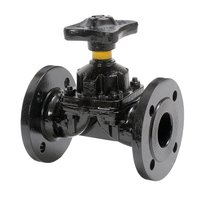

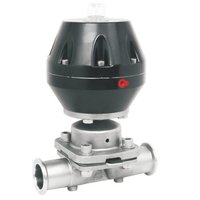
Diaphragm valves across 974 listed configurations — weir (metallic or thermoplastic body) and straight-through (metallic only), DN15 to DN300, in cast iron, SS316, PVC-U, CPVC and PVDF.
Sourcing at a Glance
- HS Code(s)
- 8481.80 (six-digit; 8-digit ITC-HS pending CHA confirmation)
- MOQ Range
- Quoted per order
- Sample Lead Time
- Quoted per order
- Production Lead Time
- Quoted per order
- FOB Basis
- Quoted per order
- Standards / Certifications
- BS EN 13397, IS 13095, EN ISO 16138
Specifying Diaphragm Valves: Body Geometry, Lining and Diaphragm
The diaphragm is the whole seal. No packed stem, no crevice between body and bonnet exposed to the medium — the diaphragm flexes to open and close, and it is the only thing the fluid ever touches on the moving side of the valve. Corrosive, abrasive or hygienic media that would attack a conventional stem seal simply never reach one.
Two body geometries. Weir type restricts the bore with a raised weir that the diaphragm presses down onto — shortest diaphragm travel, best throttling characteristic, a common choice for general process and water-treatment duty. Straight-through removes the weir for a self-draining, unobstructed bore, specified wherever the medium carries solids or is viscous enough that a weir would foul.
Size and rating. DN15 to DN300 across 974 configurations, at PN10 or PN10/PN16. This is one of the most widely documented valve categories in the broader market, with extensive independent reference material available beyond Himalay's own catalogue.
Body and lining. Cast iron is offered lined: ebonite for general acid and chemical resistance, glass for the most aggressive chemistries and highest purity, PFA where both chemical resistance and higher temperature capability are needed, or unlined where the medium is non-corrosive. SS316 bodies serve process duty where metallic strength is needed without a lining. Thermoplastic bodies — PVC-U, CPVC, PVDF — are moulded, listed on the weir geometry only; PVC-U and CPVC are offered flanged or solvent-cement socket, PVDF flanged only.
Diaphragm selection. EPDM is the general-purpose choice; the 2-ply PTFE-faced/EPDM-backed construction puts PTFE's near-universal chemical inertness on the wetted face while EPDM supplies the flex behind it — specified for aggressive or high-purity media where a plain elastomer diaphragm would degrade; NBR handles oils and hydrocarbon contamination. Diaphragm life is a function of chemical attack and flex-cycle count together — state both service conditions and cycle rate in the enquiry.
Standards. BS EN 13397 governs metallic-bodied diaphragm valves; IS 13095 is the Indian counterpart referenced alongside it on catalogue SKUs; EN ISO 16138 governs thermoplastic-bodied valves specifically, covering design, functional characteristics, manufacture, pipe connection and pressure/temperature rating for isolating and control service.
Operation. Manual handwheel is standard; pneumatic actuation serves automated process lines; bare stem allows a third-party actuator to be fitted to the buyer's own specification.
Conformity. CE for the EU, SABER for Saudi Arabia, ECAS for the UAE, EN 10204 3.1 certificates as the EU procurement baseline; pharmaceutical and food-contact duty require specific elastomer certifications, confirmed at RFQ stage.
From spec to RFQ. State the medium and its chemistry, concentration, temperature and solids content, working pressure, body geometry preference, lining or thermoplastic body, diaphragm material, and destination market. Share the process data sheet with your RFQ and the configuration is matched against the catalogue directly.
How Diaphragm Valves Work
Mechanism: a flexible diaphragm is the only moving barrier between the medium and the outside. In a weir-type body, a raised weir sits inside the valve, and "the diaphragm makes contact to form a positive seal" against it — a design that "significantly reduces the travel distance of the diaphragm from fully open to fully closed." Straight-through bodies remove that weir entirely: "the diaphragm must flex downward to seal directly against the bottom of the valve," inside "a streamlined, flat-bottomed valve body to minimize flow resistance and pressure drop." Himalay lists exactly this split — weir and straight-through — as its two product types. Because the diaphragm itself is the seal, there is no packed stem and no crevice on the wetted side for the medium to attack or stagnate in, which is the logic behind the catalogue's own range of linings and diaphragm materials.
Industries served: wherever a stem-leak path or a trapped crevice cannot be tolerated. IQS Directory lists chemical processing and water treatment as major users, chosen for the valve's ability to handle corrosive media, alongside food and beverage processing, where "cleanability, reliability, and process integrity are essential," pharmaceuticals and biotechnology requiring "sanitary fluid control," wastewater treatment for handling "sludge, wastewater, pulp, powders," and pulp and paper for its "reliable shutoff and hygienic design." In biopharmaceutical plant specifically, Valve Magazine reports that "weir-type diaphragm valves are the mainstay for critical utilities and process applications," and that radial-contour weir valves "frequently are used as tank outlet valves" because "the radial diaphragm valve contour often closely matches the contour of the vessel." That range — aggressive-chemical duty at one end, sanitary biotech duty at the other — is why Himalay's own lining and diaphragm-material options run from ebonite and glass lining to a 2-ply PTFE-faced diaphragm.
Standards landscape: one body construction, two standards split by material. BS EN 13397 covers diaphragm valves "with metallic shell materials," specifying nominal sizes from DN10 to DN300 on flanged ends and DN8 to DN300 on weld ends, at PN6, PN10, PN16, PN25 or Class 150, and setting requirements for material selection, design, manufacture and performance testing. ISO 16138 covers the thermoplastic side of the family: it "specifies requirements for design, functional characteristics and manufacture of diaphragm valves made of thermoplastics materials intended for isolating and control service," applicable to "hand- or power-operated valves... irrespective of the field of application and the fluids to be conveyed," with a stated pressure/temperature envelope of −40°C to +120°C and a 25-year design life. Both standards are named on catalogue SKUs. Sources: [IQS Directory — Types, Materials and Considerations of Diaphragm Valves](https://www.iqsdirectory.com/articles/diaphragm-valve.html); [Valve Magazine — The Biopharm Industry](https://valvemagazine.com/articles/the-biopharm-industry/); [en-standard.eu — BS EN 13397:2002 scope](https://www.en-standard.eu/bs-en-13397-2002-industrial-valves-diaphragm-valves-made-of-metallic-materials/); [ISO — ISO 16138:2006](https://www.iso.org/standard/30872.html)
Frequently Asked Questions
- Weir type or straight-through — which body should I specify?
- Weir-type bodies give the shortest diaphragm travel and the best throttling control, since the raised weir does most of the flow restriction — the standard choice for clean-to-moderately-dirty fluids where some flow regulation is needed. Straight-through bodies remove the weir entirely for an unobstructed, self-draining passage, suited to slurries, viscous media and anything solids-bearing that would catch on a weir. Both are listed catalogue families. State whether the duty needs throttling or simply drain-clean isolation.
- Which lining suits my chemical service?
- Ebonite lining handles a broad range of acids and general corrosive chemicals at moderate temperature; glass lining gives the widest chemical resistance for aggressive acids and high-purity process duty; PFA lining combines broad chemical resistance with higher temperature capability than ebonite. Unlined bodies suit non-corrosive service where lining cost isn't justified. All four are listed. State the specific chemical, its concentration and the operating temperature — lining selection is chemistry-specific, not a general "corrosive" category.
- Metallic or thermoplastic body — which do I need?
- Metallic bodies (cast iron, SS316) to BS EN 13397 are available in both weir and straight-through geometries and handle higher pressures and temperatures generally. Thermoplastic bodies (PVC-U, CPVC, PVDF) to EN ISO 16138 are listed on the weir-type geometry only, giving lower cost and strong chemical inertness for water treatment and dosing duty within a lower pressure and temperature envelope. State working pressure and temperature — that alone usually decides between the two families.
- Which diaphragm material matches my service?
- EPDM is the general-purpose diaphragm for water and many chemicals; the 2-ply PTFE-faced, EPDM-backed construction combines PTFE's chemical inertness on the wetted face with EPDM's flexibility behind it, for aggressive or high-purity media; NBR suits oily and hydrocarbon-contaminated service. All three are listed. State the medium and cycle frequency — diaphragm life, not body material, is usually the limiting factor in service.
- What conformity documentation applies for EU, Saudi and UAE imports?
- CE marking for EU-bound equipment per applicable directives, SABER for Saudi Arabia, ECAS for the UAE, with EN 10204 3.1 material certificates as the EU procurement baseline. For pharmaceutical or food-contact duty, state the required elastomer certification (e.g. FDA, USP Class VI) in the enquiry.
Last verified: 6 August 2026
Request a Quote for Diaphragm Valves