• Homeβ€Ί
  • Pneumatic Diaphragm Valves
  • Homeβ€Ί
  • Valvesβ€Ί
  • Pneumatic Diaphragm Valves
  • Pneumatic Diaphragm Valves

    Source pneumatic diaphragm valves from India's verified manufacturers and exporters on Himalay. Browse the full range for industrial and export applications.

    Showing 1 items
    1 items
    operation type
    Pneumatic Actuator
    body material
    SS304
    SS316
    end connection
    Flanged
    Tri-Clamp
    seat material
    EPDM
    PTFE
    trim material
    SS316
    Pneumatic Diaphragm Valves sourcing

    About Pneumatic Diaphragm Valves

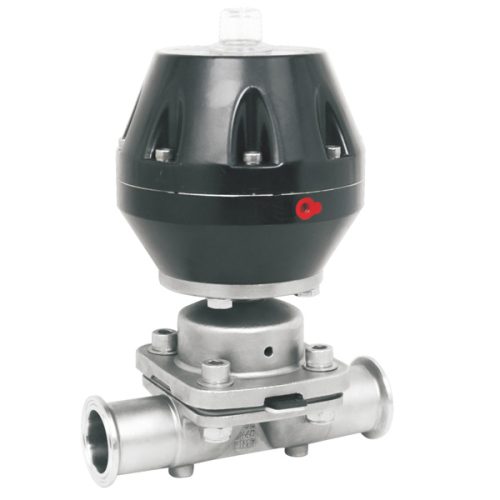
    Pneumatically actuated diaphragm valves for automated dosing and process isolation, fail-close, fail-open and double acting, weir and straight through bodies.

    A pneumatic diaphragm valve pairs a weir or straight through diaphragm valve body with a compact air actuator, piston or rolling-diaphragm type, mounted in place of the handwheel bonnet assembly. Spring-return actuators give fail-close or fail-open action on air failure, while double acting units use air for both strokes where fail position is unimportant and higher thrust is wanted. The combination automates chemical dosing, water and effluent treatment, CIP routing and batch process isolation, with solenoid valves for on-off switching, limit switch boxes for position feedback, and positioners where the valve must modulate flow in a control loop. Because the process diaphragm still provides glandless isolation, the actuated valve keeps the corrosion and contamination advantages of the manual type. Indian manufacturers commonly supply cast iron, WCB and CF8M bodies with rubber, EPDM, butyl and PTFE-faced diaphragms, sizes DN15 to DN250 and larger on request, flanged to ASME B16.5 Class 150 or EN 1092 PN10/16. An enquiry should state body pattern and materials, diaphragm grade, medium and temperature, line pressure, available air supply pressure, fail action, accessories and quantity.

    Buyer guide

    Specifying Pneumatic Diaphragm Valves: Fail Action, Sizing and Accessories

    01

    What the valve is actually for

    A pneumatic diaphragm valve automates the glandless shutoff of a diaphragm valve: chemical dosing skids, water and effluent treatment plants, CIP and routing services, and batch processes that open and close corrosive lines many times an hour. The air actuator replaces the handwheel bonnet; the process side, body, lining and diaphragm, is unchanged, so specify it exactly as you would a manual valve and then add the actuation questions.

    02

    Body and diaphragm first

    Choose weir bodies for chemicals, throttling and PTFE-faced diaphragms, straight through for slurries and drainable lines. Indian manufacturers commonly supply cast iron and WCB lined bodies, CF8M stainless to ASTM A351, and rubber, EPDM, butyl or PTFE-faced diaphragms matched to the medium. Frequent automated cycling shortens diaphragm life compared with manual duty, so state the expected cycles per day and order spares accordingly.

    03

    Fail action and actuator type

    Spring-to-close is the norm for dosing, so air failure stops injection; spring-to-open protects cooling and dilution duties; double acting gives maximum thrust and no fail bias. Actuators are piston or rolling-diaphragm type sized against line pressure and minimum air pressure, typically on 4 to 7 bar instrument air. Undersizing shows up as a valve that seals on the bench and weeps on the plant, so have the sizing confirmed in the quotation.

    04

    Accessories

    Solenoid valves with the correct voltage and, where relevant, hazardous area certification; limit switch boxes or proximity switches for PLC feedback; positioners where the valve modulates in a dosing or pH loop; filter regulators at the valve; stroke speed controls where water hammer is a risk on fast closure. Optical or mechanical position indicators are standard and worth keeping.

    05

    Ratings, ends and standards

    Sizes commonly run DN15 to DN250 with larger on request; body pressure ratings taper with size per MSS SP-88 practice and elastomer temperature limits govern. Ends are flanged ASME B16.5 Class 150 or EN 1092 PN10/16, screwed on small bores. Specify body design to MSS SP-88 or EN 13397 and testing to API 598.

    What to state in the enquiry

    Pattern, size, quantity, body and lining material, diaphragm grade, medium, concentration and temperature, line pressure, minimum air pressure, fail action, cycles per day, on-off or modulating, accessory list with electrical details, governing standard, inspection and export packing. Complete air-side data is what separates a firm quotation from a guess.

    Submit an enquiry β†’
    Technical guide

    How Pneumatic Diaphragm Valves Work

    Two diaphragms, two jobs

    A pneumatic diaphragm valve contains two flexible members that must not be confused. The process diaphragm in the valve body is the closure and the fluid barrier, exactly as in a manual valve. The actuator above it converts air pressure into linear thrust, either through a piston with lip seals or through its own rolling diaphragm, and drives the same compressor that a handwheel spindle would. Air moves the mechanism; the process diaphragm still keeps the fluid away from every moving part.

    Spring-return action

    In a fail-close unit a spring stack holds the compressor down and the valve shut; instrument air admitted under the piston lifts against the springs to open. Fail-open units reverse the arrangement. On loss of air the spring drives the valve to its designed safe state in a stroke time of typically under a second on small bores, which is the property that lets a dosing line shut itself when the compressor trips. Double acting units replace the spring with air on both sides of the piston, gaining thrust and losing the defined fail position.

    Thrust and sealing

    Closing force must both deform the elastomer onto the seat and hold it there against line pressure acting on the diaphragm area. Because spring force falls as the spring extends and air pressure varies with the header, actuator sizing works at the worst corner: minimum air, maximum line pressure, end of stroke. This is why reputable manufacturers ask for minimum air pressure rather than nominal, and why an actuator that is marginal on paper fails to bubble-tight seat in service. A correctly set travel stop matters even more than in manual valves, since an actuator applies its full thrust every cycle with no operator judgement in the loop.

    Switching and modulating

    On-off service uses a solenoid valve to route air, with limit switches reporting position to the control system. For modulating duty a positioner compares the control signal with actual stroke and adjusts air continuously; on a weir body this gives serviceable control for dosing and pH loops, though rangeability and characterisation fall short of a purpose-built control valve designed to IEC 60534 practice, which is the honest boundary of the type.

    How they fail

    Process diaphragm fatigue accelerated by high cycle counts, actuator seal wear from wet or dirty air, solenoid failures, and water hammer from over-fast closure on long liquid lines, tamed with speed controls. Air quality and cycle counting predict most of it.

    Why the details matter

    Matched actuator sizing, a set closing stop, clean air and a diaphragm compound chosen for the real medium turn an automated valve into a fit-and-forget item; any one of them missed becomes the plant's most frequently rebuilt valve.

    Popular searches in Pneumatic Diaphragm Valves

    Frequently Asked Questions

    Fail-close, fail-open or double acting, which actuator should I specify?
    What air supply do pneumatic diaphragm valves need?
    Can a pneumatic diaphragm valve modulate flow, or is it on-off only?
    What should my RFQ for pneumatic diaphragm valves include?