UAE Departure from OPEC Reshapes Gulf Energy Economics and Downstream Industrial Costs
The UAE has left OPEC, freeing ADNOC to target 5M bpd by 2027, but Hormuz pipeline limits and downstream petrochemical and aluminum costs complicate the gains.
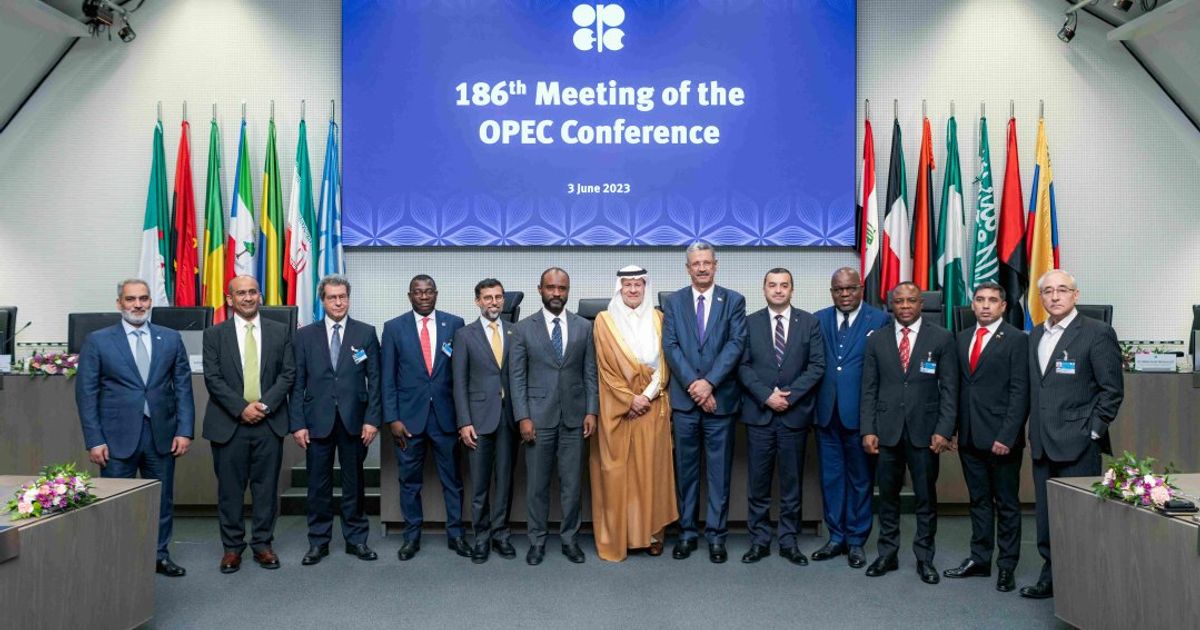
The UAE has exited OPEC, ending a membership that had constrained the country's oil output well below its production capacity. ADNOC has built capacity to produce 5 million barrels per day (bpd) by 2027, according to ADNOC's 2027 Capacity Expansion Plan (announced November 2022, reaffirmed in ADNOC's 2025 Annual Review). The UAE's OPEC quota limited output to 3.2M bpd. With the departure, OPEC's share of global oil supply drops from approximately 30% to 26%, according to the OPEC Monthly Oil Market Report (May 2026).
The Strait of Hormuz constraint
The UAE's ability to capitalize on its full production capacity faces a geographic limitation. The Habshan-Fujairah pipeline, the country's only export route bypassing the Strait of Hormuz, has a maximum throughput of 1.8M bpd, according to CSIS, "The Habshan-Fujairah Pipeline and Strait of Hormuz Bypass Capacity" (2023 update). The remaining 3.2M bpd of export capacity must transit the 39km-wide Strait of Hormuz.
This creates a structural vulnerability: the UAE can produce at full capacity, but a disruption at Hormuz would restrict export volumes to 1.8M bpd regardless of production levels.
Downstream effects on petrochemicals and metals
The departure has implications beyond crude oil markets. Polypropylene, polyethylene, and naphtha all price off crude benchmarks. Petrochemical, plastic, polymer, and packaging production across the GCC carries input costs directly tied to oil prices.
Emirates Global Aluminium (EGA) produces approximately 4% of global aluminum output, according to EGA's Annual Report 2024, using low-cost UAE natural gas as a primary energy input. Shifts in energy costs flow through to aluminum pricing, affecting downstream products including enclosures, castings, and extrusions.
When crude reprices, the cascade through petrochemicals, metals, and energy-intensive manufacturing typically occurs within weeks rather than months.
Two divergent scenarios for Gulf industrial costs
Scenario 1: Hormuz remains open. The UAE increases output toward full capacity, adding supply to global markets. Crude prices decline. Lower oil revenue reduces UAE government income, which derives approximately 40% from hydrocarbons. This could constrain infrastructure spending, subsidies, and investment incentives that have attracted manufacturers to the Emirates.
Scenario 2: Hormuz disruption. Additional UAE production capacity cannot reach export markets. Gulf cargo faces rerouting or delays. Petrochemical input costs rise, and Gulf-based manufacturers reprice accordingly.
Commodity index divergence
The implications vary depending on which commodity price index is referenced. LME spot, 3-month forward, and US Midwest premium prices are currently diverging, meaning that contract terms referencing different indices will produce different cost outcomes for the same commodity.
Sources: ADNOC, 2027 Capacity Expansion Plan (announced November 2022; reaffirmed in ADNOC Annual Review 2025); OPEC Monthly Oil Market Report (May 2026); Emirates Global Aluminium (EGA), Annual Report 2024; CSIS, "The Habshan-Fujairah Pipeline and Strait of Hormuz Bypass Capacity" (2023 update).
Anurag Deherkar
Writes on cross-border trade, export compliance, and how Indian MSME manufacturers can compete globally. Building Himalay.io to connect quality-assured Indian suppliers with international buyers.