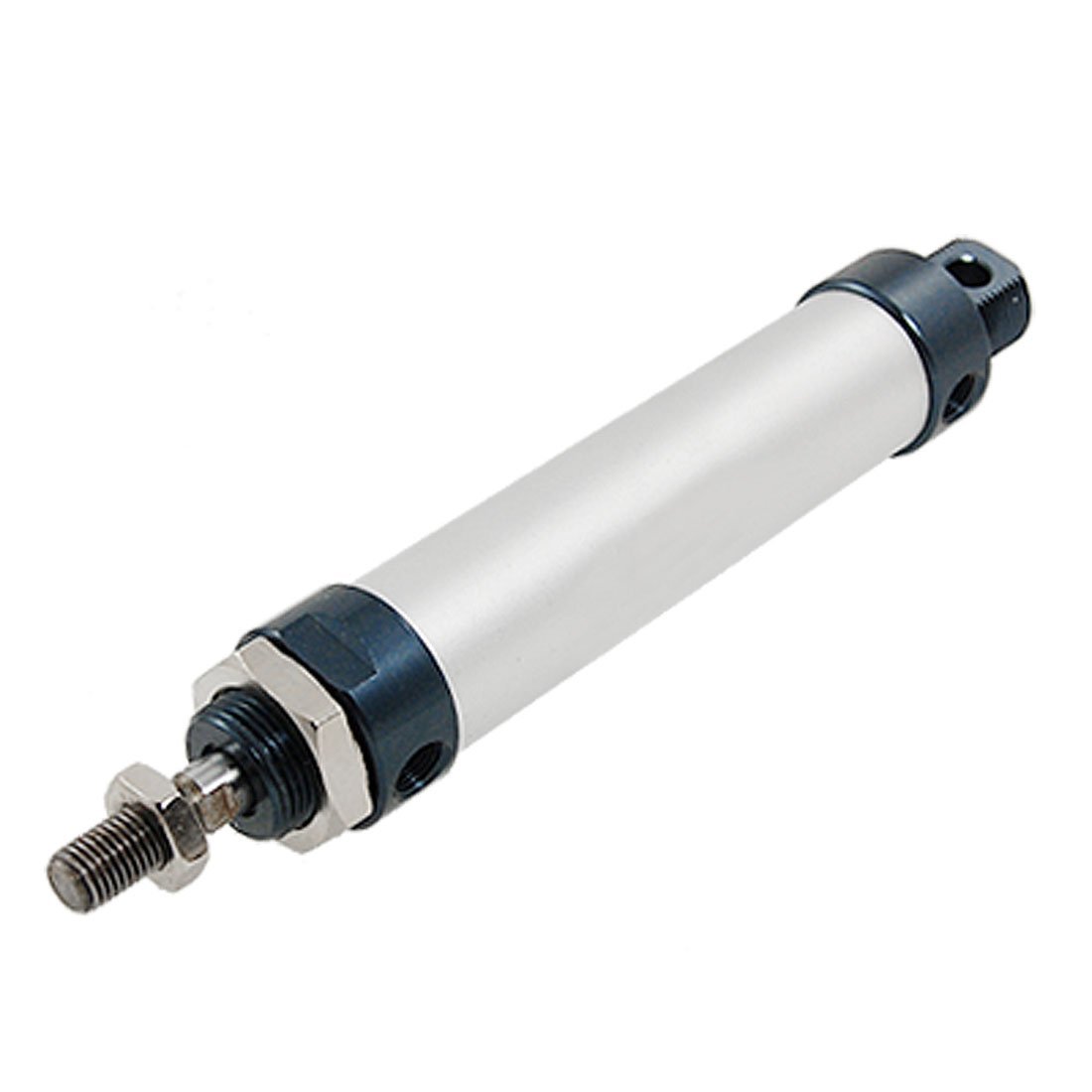
Mechanism: compressed air converted directly into a push or pull
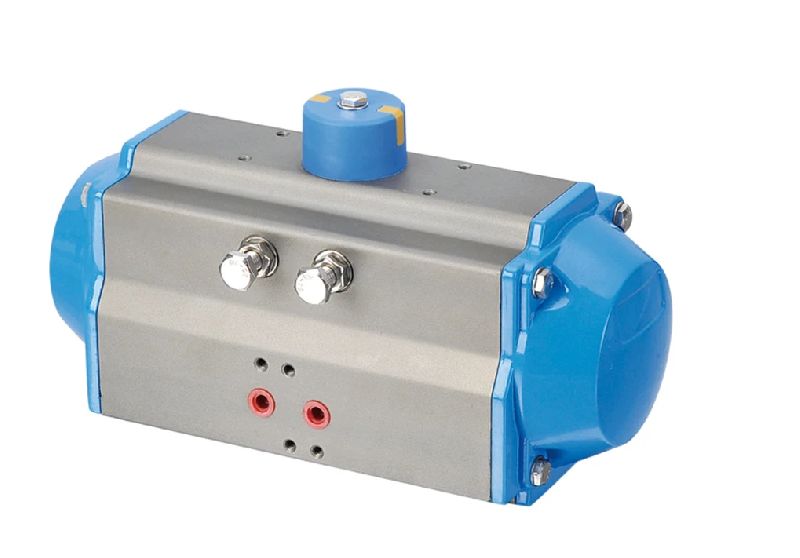
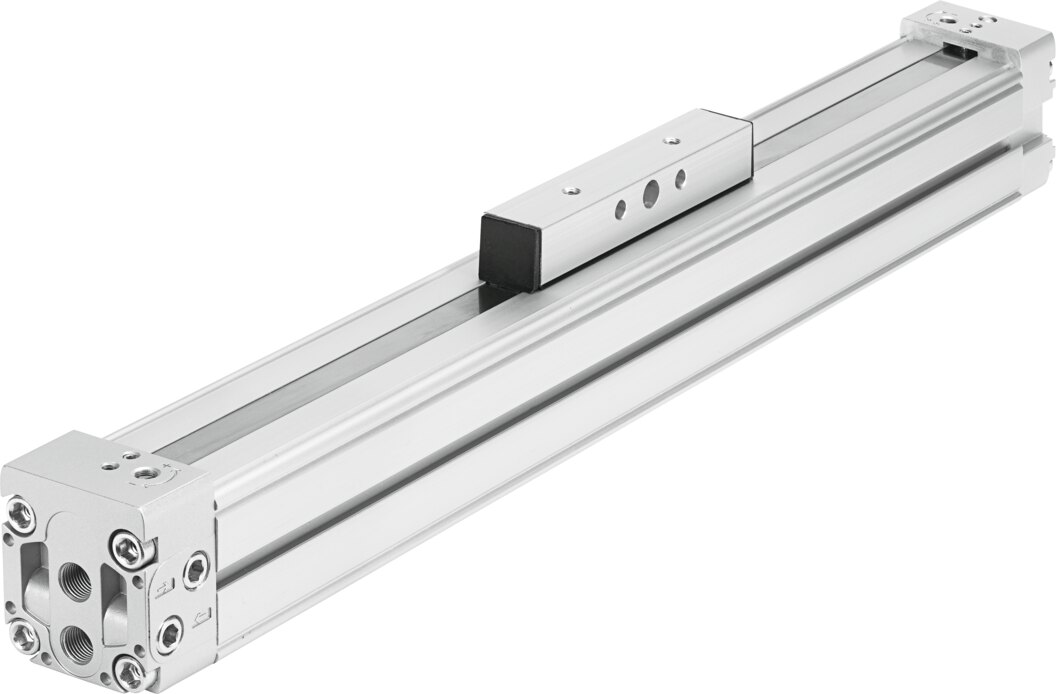
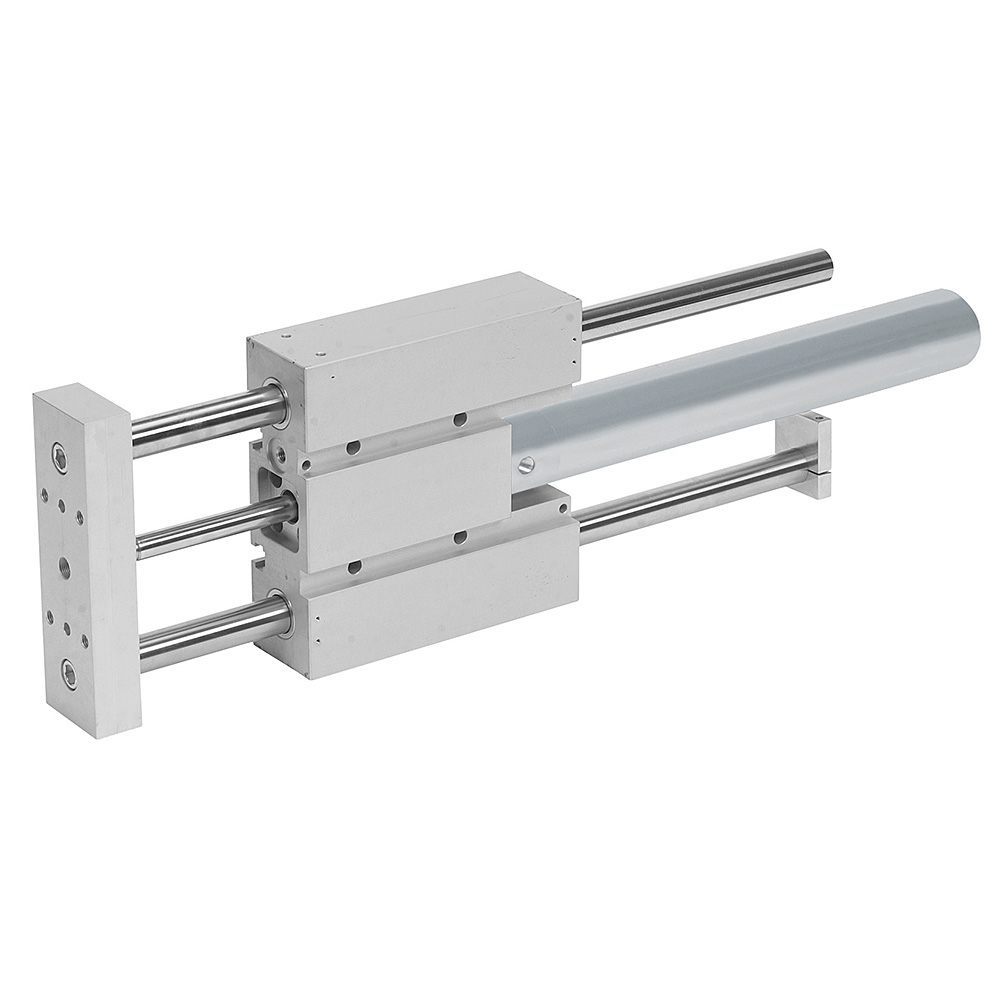
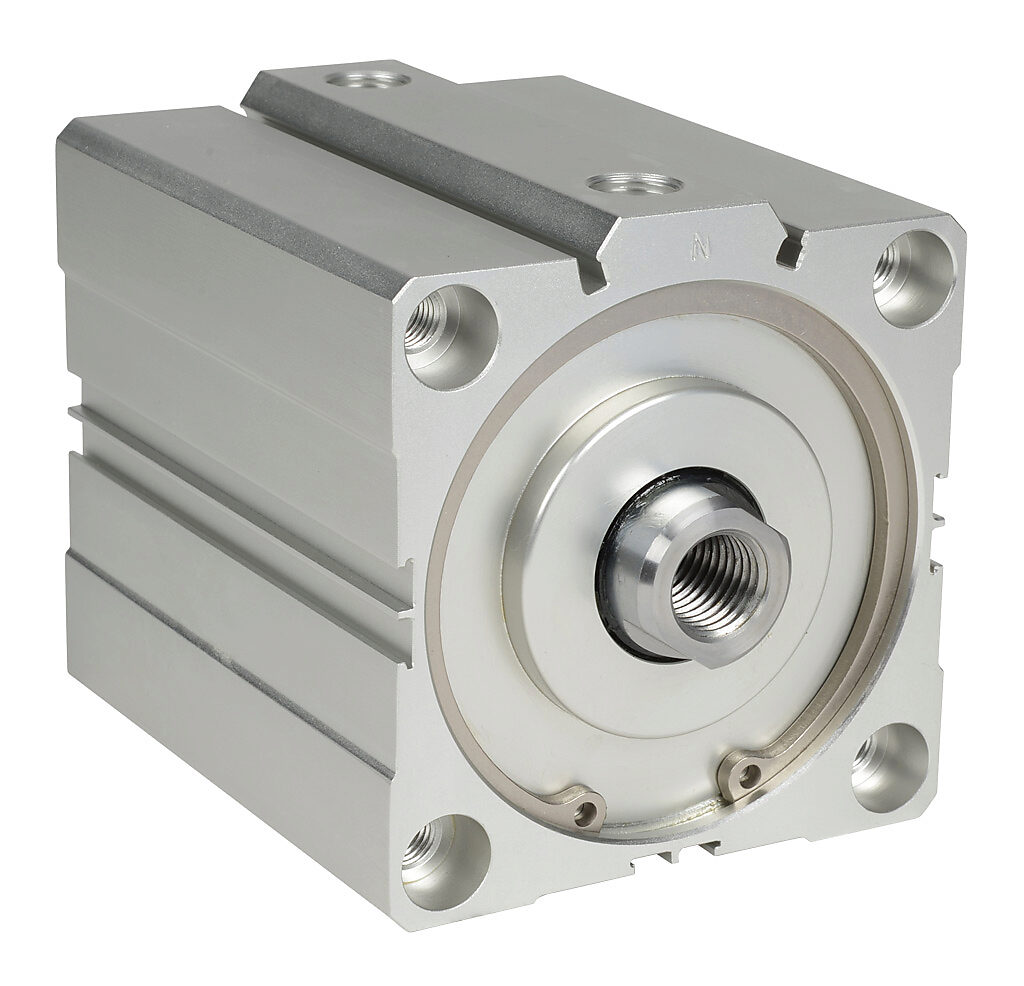
A pneumatic cylinder is, at its core, simple: "the pneumatic cylinder converts the pressure energy of a compressed air medium into mechanical energy in the form of linear or rotary motion." In a double-acting cylinder — the catalogue's larger configuration — "both sides of the cylinder are supplied with certain working pressure. Force exerted by the compressed air moves the cylinder piston rod in two directions," giving powered, controllable motion on both the extend and retract stroke. A single-acting cylinder does only half that job by design: "compressed air enters to push the piston out of the cylinder. The spring automatically retracts the piston to its home position when the pressure is removed" — trading powered return force for a mechanical fail-safe position on loss of air supply.