Ethylene Glycol Solvents
Source ethylene glycol solvents from India's verified manufacturers and exporters on Himalay. Browse the full range for industrial and export applications.
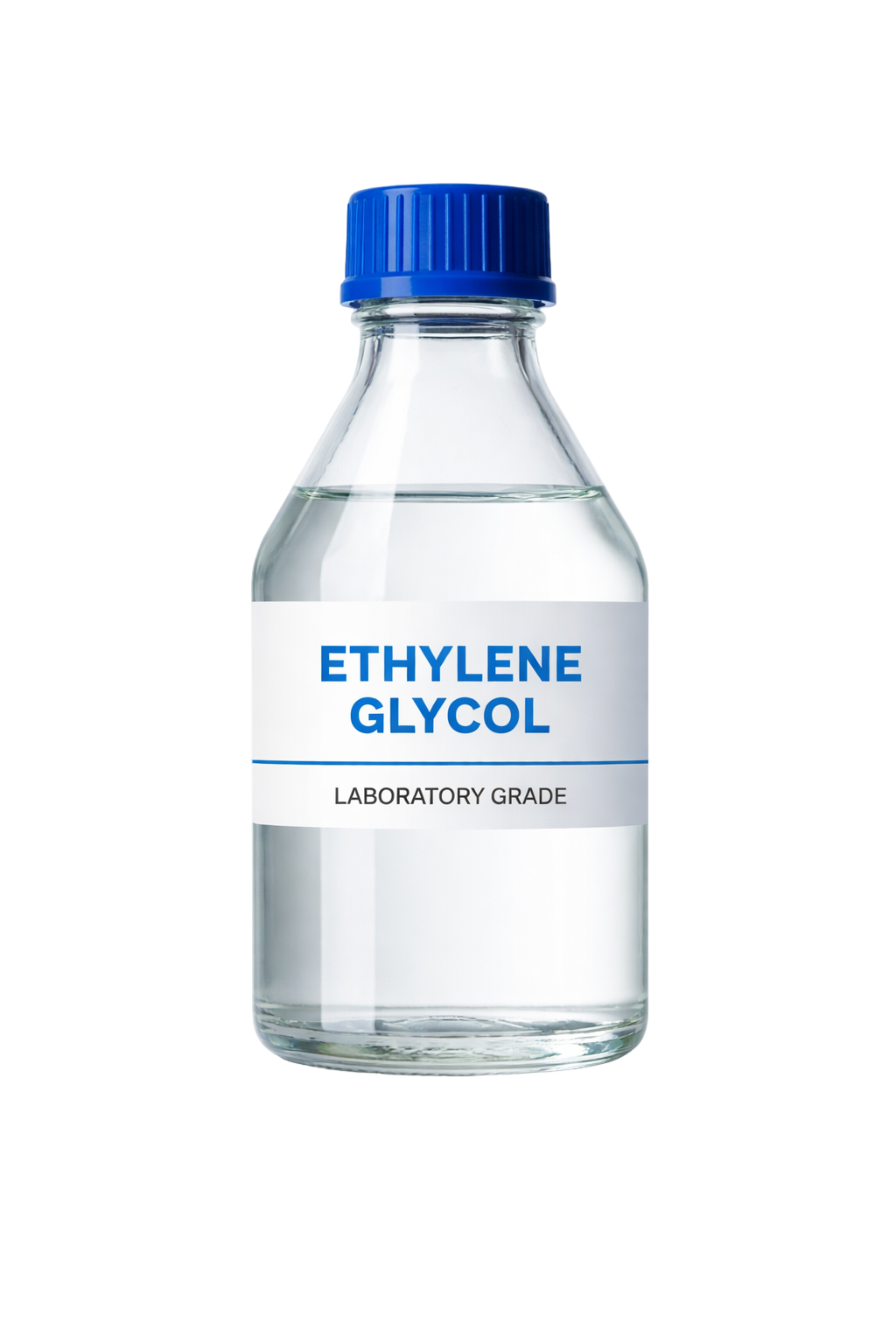
About Ethylene Glycol Solvents
Ethylene glycol (mono-ethylene glycol, MEG) is a high-boiling diol used as a coolant, heat-transfer fluid, humectant, and chemical intermediate. Buyers source it for antifreeze and engine coolant, polyester (PET) and resin manufacture, heat-transfer and HVAC fluids, de-icing, and as a solvent and humectant. Its strong freeze depression and heat-transfer efficiency make it the industry-standard automotive and industrial coolant base.
Grades commonly offered include fibre/polyester grade (high purity for PET), industrial/antifreeze grade, and inhibited coolant blends. CoA parameters usually quoted include assay by GC, water content, diethylene glycol content, color (APHA), acidity, and specific gravity; antifreeze blends are often referenced against ASTM D1384 corrosion performance. HS classification is provided on shipping documentation. Ethylene glycol carries an acute/STOT toxicity classification under CLP, reflected in labelling.
Packaging is offered in around 220-230 kg drums, ~1000-1250 kg IBCs, and ISO tanks or flexibags for bulk; smaller packs serve specialty needs. Bulk versus packed selection follows volume and destination.
Ethylene glycol is generally not a flammable-liquid transport hazard; SDS, CLP/GHS labelling, and any applicable transport documentation are coordinated where required, and REACH registration is addressed via the manufacturer or an Only Representative for EU import. SABER/SASO is handled for Saudi Arabia where applicable.
Himalay's verified manufacturer and exporter partners supply ethylene glycol with CoA per batch, SDS, REACH/CLP compliance coordinated for EU, GHS labelling, and SABER for Saudi Arabia handled as part of the standard order flow.