Global Defence Spending Reached $2.7 Trillion in 2024, Steepest Annual Increase Since 1988
Global military spending hit $2.7 trillion in 2024, the steepest rise since 1988, as NATO rearmament, GCC growth, and India's domestic shift absorb precision manufacturing capacity.
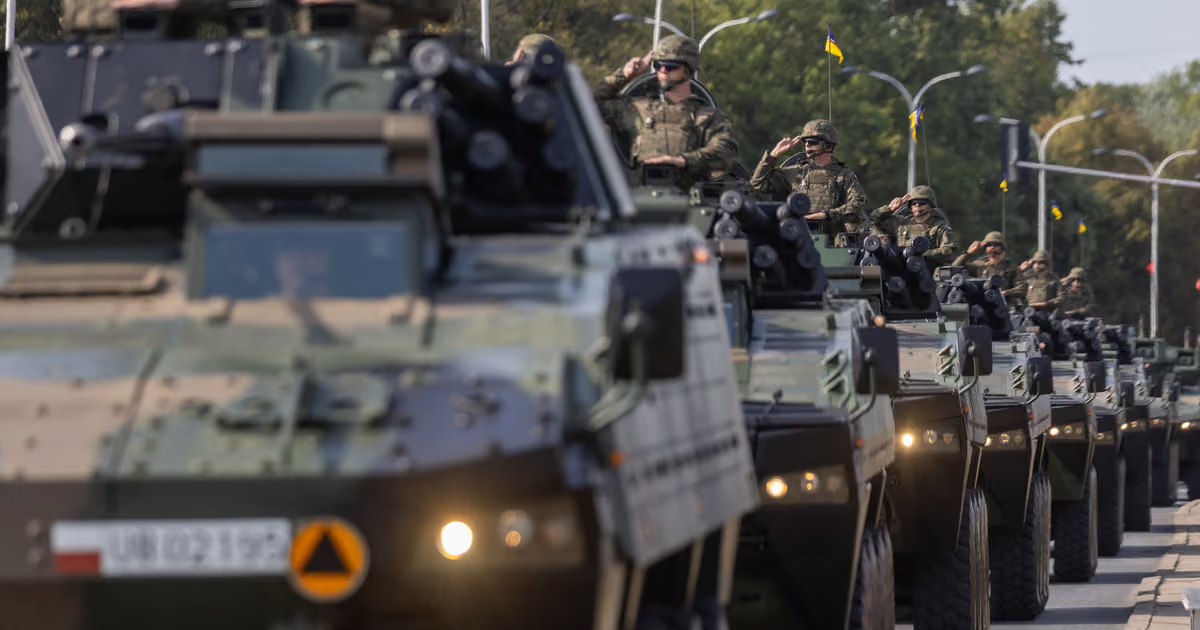
Global military expenditure reached $2.7 trillion in 2024, a 9.4% increase over the previous year, according to the Stockholm International Peace Research Institute's SIPRI Yearbook 2025 and its Military Expenditure Database. The increase is the steepest single-year rise since 1988. Current spending trajectories point toward $3.6 trillion by 2030.
NATO Rearmament
All 32 NATO member states now meet or exceed the alliance's 2% of GDP defence spending target. The average across the alliance stands at 2.76% of GDP, according to NATO's Annual Report 2024 (published January 2025). An unofficial target of 5% of GDP by 2035 is under discussion.
Germany committed EUR 100 billion to military modernisation. France, Poland, the United Kingdom, Italy, and the Nordic states are all scaling defence procurement budgets.
The European Defence Agency has mandated that 55% of military purchases come from European factories by 2030. This target applies to a dramatically increased budget, placing significant demand on a European manufacturing base that contracted over the preceding two decades. Defence procurement extends into precision components, electronics assemblies, specialty metals, and maintenance, repair, and overhaul (MRO) services, creating competition for manufacturing capacity that also serves commercial customers.
GCC Defence Expenditure
Gulf Cooperation Council countries have maintained approximately 15% year-on-year defence spending growth. Saudi Arabia, the UAE, and Qatar are the largest spenders in the region.
GCC defence budgets are linked to national industrial strategies. Saudi Arabia's In-Kingdom Total Value Add (IKTVA) programme and the UAE's In-Country Value (ICV) framework tie defence procurement to domestic manufacturing development. According to the MEED Projects database (2024 edition), procurement extends deep into the supply chain, covering precision components, electronics assemblies, specialty metals, optical systems, communications equipment, and MRO services.
India's Defence Manufacturing Growth
India's defence procurement has shifted substantially toward domestic sourcing over the past decade. A decade ago, approximately 60% of India's defence procurement went to foreign suppliers. That figure has reversed: 75% is now sourced domestically, according to India's Ministry of Defence Annual Report 2024-25.
Over 100 private Indian manufacturers hold defence production clearances. India's defence exports grew from $200 million in 2016 to $2.8 billion in 2024, according to the India Ministry of Defence Annual Report 2024-25 and the SIPRI Arms Transfers Database (March 2025 update). The government's stated target is $5 billion in defence exports.
Structural Outlook
Defence spending at current levels is unlikely to reverse in the near term. NATO commitments are embedded in parliamentary budgets. GCC spending is tied to decade-long national industrial strategies. The sustained increase in defence procurement is absorbing manufacturing capacity across precision machining, electronics, specialty metals, and related industrial sectors. The SIPRI Military Expenditure Database projects that demand for these categories will continue growing through at least 2030.
Sources: Stockholm International Peace Research Institute, SIPRI Yearbook 2025 and Military Expenditure Database; SIPRI Arms Transfers Database (March 2025 update); NATO Annual Report 2024 (published January 2025); European Defence Agency; India Ministry of Defence Annual Report 2024-25; MEED Projects database (2024 edition).
Anurag Deherkar
Writes on cross-border trade, export compliance, and how Indian MSME manufacturers can compete globally. Building Himalay.io to connect quality-assured Indian suppliers with international buyers.
Related insights
.webp) Market Intelligence
Market IntelligenceIndia's MSMEs Account for 48.6% of Merchandise Exports, but Fewer Than 1% of Firms Participate in Trade
 Demand Signal
Saudi Arabia Opens Tender for 672km Railway Linking GCC Network's Final Gap
 Market Intelligence