• Homeβ€Ί
  • Triple Offset Butterfly Valves
  • Homeβ€Ί
  • Valvesβ€Ί
  • Triple Offset Butterfly Valves
  • Triple Offset Butterfly Valves

    Source triple offset butterfly valves from India's verified manufacturers and exporters on Himalay. Browse the full range for industrial and export applications.

    Showing 1 items
    1 items
    operation type
    Actuator
    Gear
    body material
    Alloy Steel
    SS304
    SS316
    WCB
    end connection
    Flanged
    seat material
    Metal Seated
    trim material
    SS316
    Stellite
    Triple Offset Butterfly Valves sourcing

    About Triple Offset Butterfly Valves

    Metal-seated triple offset butterfly valves for zero-leakage, fire-safe isolation of steam, hydrocarbons and hot gases, DN80 to DN1200, ASME Class 150 to 600.

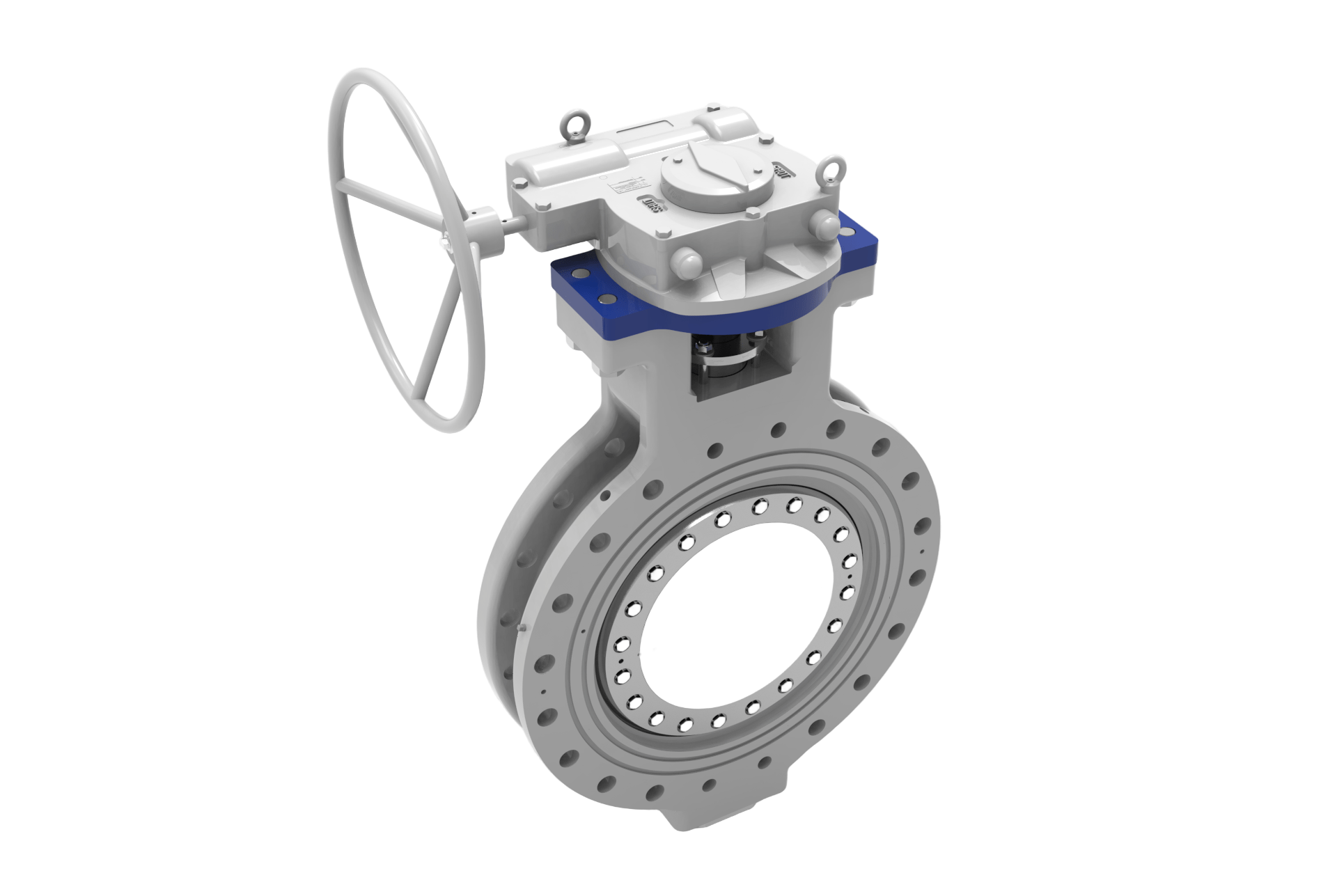
    A triple offset butterfly valve adds a third geometric offset to the double eccentric design: the seat is machined as a section of an inclined cone, so the metal seal ring meets the metal seat without any rubbing or interference until the final instant of closure. The result is a torque-seated, metal-to-metal valve that achieves bubble-tight shutoff normally associated with wedge gate valves, in a quarter-turn body a fraction of the weight and length. Triple offset valves isolate superheated steam, thermal oil, hot gases, hydrocarbons and cryogenic media where soft seats cannot survive, and they are inherently fire-safe because nothing in the seal path burns; designs are tested to API 607. Indian manufacturers commonly offer wafer, lug and double-flanged bodies in WCB, WC6, CF8M, LCB and duplex, ASME Class 150 to 600, with laminated stainless and graphite seal rings or solid Inconel rings for severe service. Design follows API 609 Category B and EN 593, ratings ASME B16.34, testing API 598. An enquiry should state size, class, materials, medium, temperature, differential pressure, direction, actuation and documentation requirements.

    Buyer guide

    Specifying Triple Offset Butterfly Valves: Seal Ring, Class and Shutoff

    01

    What the valve is actually for

    A triple offset butterfly valve is the quarter-turn answer to duties that historically demanded wedge gate or globe valves: tight, metal-seated, fire-safe isolation of steam, superheated steam, thermal oil, hot gases, hydrocarbons and cryogenic fluids. It offers gate-valve shutoff in a body that is far shorter, lighter and faster to operate, which is why it has displaced gate valves in refineries, power plants and district heating.

    02

    The decision that defines the valve

    Everything hangs on the seal ring and seat pair. The standard offering is a laminated ring of alternating stainless steel and graphite layers running against an integral or weld-overlaid body seat; it conforms well, tolerates thermal cycling and is inherently fire-safe. Solid rings in SS316, duplex or Inconel suit abrasive, very hot or graphite-intolerant services, often against Stellited seats. State medium, temperature extremes and expected cycle frequency and let the manufacturer propose the pair.

    03

    Class, size and body pattern

    Indian manufacturers commonly offer ASME Class 150, 300 and 600 in sizes from DN80 to DN1200 and beyond, as wafer, lug and double-flanged bodies; double-flanged is usual on larger sizes and critical services. Pressure-temperature ratings follow ASME B16.34 for the body material: WCB for general duty, WC6 for higher steam temperatures, LCB or LCC for low temperature, CF8M and duplex for corrosion.

    04

    Shutoff and direction

    Specify the test standard and acceptance rate explicitly, API 598 or ISO 5208 Rate A, and the direction it applies to. Most triple offsets have a preferred sealing direction with a reduced reverse rating; if the line can pressurise the valve from either side, say so.

    05

    Fire safety

    The metal seal path makes the design inherently fire-resistant, but certification still matters on hydrocarbon duty: ask for type testing to API 607.

    06

    Operation

    These are torque-seated valves, so closing to a hard stop with the specified torque matters; gear operators need a sensible handwheel size, and actuators must be sized from the manufacturer's seating torque with margin, using torque-limited seating where the maker requires it.

    What to state in the enquiry

    Size, class, body pattern, body material, seal ring and seat construction, medium with design temperature and pressure, differential pressure and direction, shutoff standard and rate, fire-safe certification, operator or actuator, testing to API 598, documentation (EN 10204 3.1, NDE reports), quantity, delivery point and export packing or third-party inspection requirements.

    Submit an enquiry β†’
    Technical guide

    How Triple Offset Butterfly Valves Work

    Three offsets, one purpose

    The first offset puts the shaft behind the plane of the sealing face, keeping the seal circle uninterrupted. The second moves the shaft off the pipe centreline, creating the cam action that swings the disc clear of the seat on opening. The third is different in kind: the axis of the conical seat surface is inclined relative to the pipe axis, so the seat is a slice of an oblique cone rather than a symmetric ring. The geometric consequence is that no point of the seal ring is in contact with the seat at any disc position except fully closed. There is no rubbing, no interference and no elastomer; the ring lands on the cone evenly around its whole circumference at the final degree of travel and is then loaded into it by torque, the way a tapered plug seats in a tapered bore.

    Torque seating, not position seating

    A concentric valve seals by squeezing rubber; a triple offset seals by force. The operator or actuator drives the disc into the cone until the specified seating torque is reached, and metal-to-metal contact pressure around the ring does the sealing. This is why closing a triple offset to a position stop rather than a torque value gives disappointing shutoff, and why actuator setup instructions deserve attention during commissioning.

    Why it survives heat and fire

    With stainless steel and graphite as the only sealing materials, there is nothing to melt, swell, cold-flow or burn. The inclined cone geometry also means thermal expansion moves the ring along the cone rather than jamming it, so the valve cycles freely from cryogenic temperatures to superheated steam. Fire testing to API 607 confirms the assembly, including graphite stem packing, keeps leakage within limits during and after a fire.

    Flow behaviour

    Open, the disc presents a slim profile and the pressure loss is modest for the face-to-face length. Triple offsets are primarily isolation valves; they can modulate, but the seal ring is not designed for sustained near-closed throttling, where high-velocity flow across the barely open ring erodes the very surfaces that make the valve tight.

    Failure modes that matter

    Seat leakage usually traces to debris trapped on the cone at closure, to under-torqued seating, or to erosion from throttling, rather than to wear from cycling, precisely because the geometry eliminates rubbing. Laminated rings can be damaged by over-torque, which crushes the graphite layers; solid rings by galling if material pairing is wrong. External leakage points are the stem packing and the seal ring retainer fasteners, both routine maintenance items.

    Direction sensitivity

    Sealing force is highest with pressure assisting the disc into the cone; reverse pressure works against the taper, so reverse ratings are lower and bidirectional certification should be requested explicitly where the service demands it. These mechanics explain both the price of the valve and why, correctly specified, it delivers gate-valve tightness for decades in a quarter-turn package.

    Popular searches in Triple Offset Butterfly Valves

    Frequently Asked Questions

    When is a triple offset valve worth the premium over a double offset?
    What does zero leakage actually mean for a metal-seated valve?
    Laminated or solid seal ring, and which materials?
    What should my RFQ for triple offset butterfly valves include?