• Homeβ€Ί
  • Specialty Gate Valves
  • Homeβ€Ί
  • Valvesβ€Ί
  • Specialty Gate Valves
  • Specialty Gate Valves

    Source specialty gate valves from India's verified manufacturers and exporters on Himalay. Browse the full range for industrial and export applications.

    Showing 2 items
    2 items
    operation type
    Gear
    Handwheel
    Pneumatic
    body material
    C12A
    Chrome-Moly
    CI
    SS304
    SS316
    WC9
    end connection
    BW
    Flanged
    Lug
    Wafer
    seat material
    Metal Seated
    Metal/Polyurethane
    trim material
    SS316
    Stellite Trim
    Specialty Gate Valves sourcing

    About Specialty Gate Valves

    Specialty gate valves including knife gate, slide gate, pressure-seal and cryogenic designs, DN50 to DN1200, in cast, forged and stainless steel from Indian manufacturers.

    Specialty gate valves cover the gate designs that step outside the standard wedge-gate catalogue: knife gate valves whose thin bevelled blade shears through slurries, pulp and powders (built to MSS SP-81 in the classic stainless wafer pattern); slide and flat gate valves for bulk solids hoppers and low-pressure isolation; pressure-seal bonnet gate valves for high-pressure, high-temperature steam and feedwater where a conventional bolted bonnet to API 600 becomes impractically heavy above roughly Class 600; and cryogenic gate valves with extended bonnets for LNG, liquid nitrogen and oxygen service down to minus 196 degrees C. Bodies span cast iron and CF8/CF8M for knife gates, WCB/WC6/WC9 and F22/F91 forgings for pressure-seal valves, and CF8/CF8M or LCB with extended stainless bonnets for cryogenics. Standard wedge valves reference API 600 (bolted bonnet steel) and API 603 (corrosion-resistant light-wall); knife gates follow MSS SP-81; pressure ratings run from PN10 wafer knife gates to Class 2500 pressure-seal, with ASME B16.34 governing pressure-temperature ratings and API 598 seat and shell testing. Sizes commonly span DN50 to DN1200. When enquiring, state the service medium and solids content, design pressure and temperature, size, end connection (wafer, lugged, flanged, butt-weld), body and trim materials, seat type (metal or resilient), operation and any standard or testing requirement. Indian foundries and forge shops export all four families with test certification.

    Buyer guide

    Specifying Specialty Gate Valves: Family, Seat, Class and Materials

    01

    What the category covers

    Standard wedge gate valves to API 600 and API 603 solve clean-service isolation. This category covers the four gate families engineered for what standard wedges cannot do: knife gates for media with solids, slide gates for bulk solids and low-pressure duty, pressure-seal gates for high-energy steam, and cryogenic gates for liquefied gases. Each family answers a different failure of the standard design, so specification starts by naming the problem.

    02

    Knife gate valves

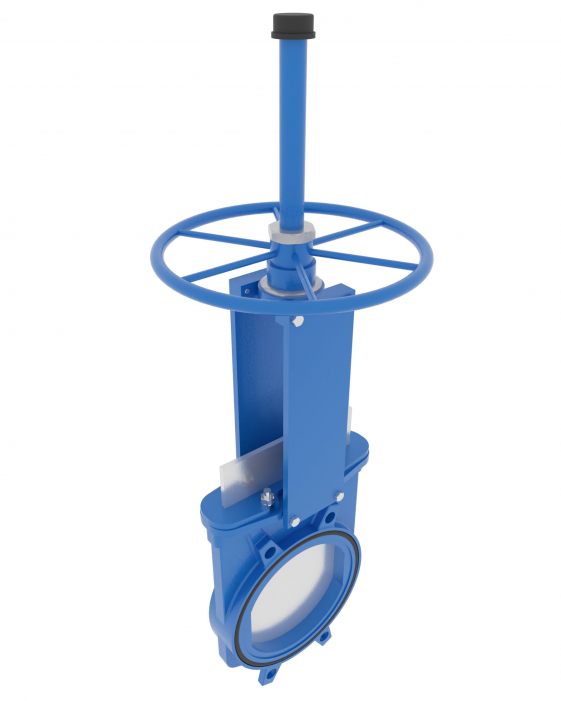
    A thin stainless blade, bevelled at its lower edge, shears through slurry, pulp, powder and fibrous media and closes into a resilient or metal seat that self-cleans each stroke. Classic wafer-pattern stainless knife gates follow MSS SP-81, typically DN50 to DN600 and larger, PN10 rated, in CF8M with elastomer seats for drop-tight low-pressure shutoff. Variants worth knowing: lugged and flanged bodies for end-of-line duty, bidirectional seats where flow reverses, through-going blades for heavy tailings, urethane liners for abrasion, and bonneted knife gates where the packing must fully contain hazardous media. State solids type and percentage β€” seat and blade choices follow directly.

    03

    Slide and flat gate valves

    For hoppers, silos and gravity spouts, square or round slide gates translate a flat plate across the opening, manually, by gearbox or pneumatically. These are bulk-handling components, not tight shutoff valves; specify the material handled, opening size and actuation rather than a pressure class.

    04

    Pressure-seal gate valves

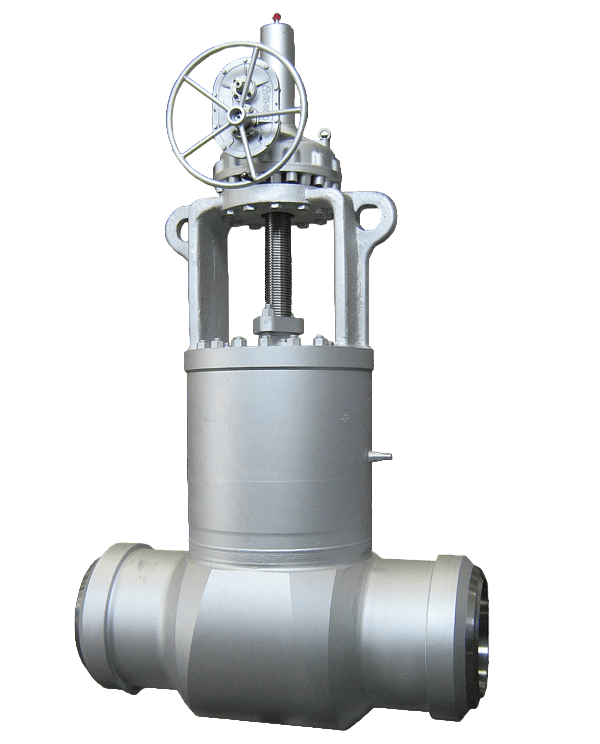
    For Class 900 to 2500 steam and feedwater, the pressure-seal bonnet uses internal pressure to energise a metal gasket against the body bore β€” sealing improves as pressure rises. Bodies are WCB, WC6, WC9 castings or F22/F91 forgings with 13Cr or Stellited trim, butt-weld or flanged ends, gear or motor operated. These valves are bought against ASME B16.34 ratings with API 598 testing; state the steam conditions and pipe schedule for weld ends.

    05

    Cryogenic gate valves

    For LNG, nitrogen and oxygen to minus 196 C: extended bonnets keeping packing warm, impact-tested CF8/CF8M or LCB bodies, PTFE-free or cold-rated soft parts, cavity relief against trapped-liquid expansion, and cleaned-for-oxygen preparation where the service demands it. Mounting orientation (stem within about 45 degrees of vertical) is part of the design, so state it.

    06

    Materials and trim across the family

    Cast iron and CF8M dominate knife gates; hardfaced trims (Stellite) and alloy steels dominate pressure-seal; low-temperature grades dominate cryogenic. Match trim hardness to solids abrasion, temperature and cycling, and ask for trim numbers, not just body grade.

    What to state in the enquiry

    Family, medium and conditions, size and pressure class, ends, materials and trim, seat and shutoff requirement, operation, standards (MSS SP-81, API 600/603, ASME B16.34), testing (API 598), inspection and certification, quantity and destination. Indian manufacturers cast, forge and machine all four families for export and quote fastest against a complete duty description.

    Submit an enquiry β†’
    Technical guide

    How Specialty Gate Valves Work

    All gates share one principle

    A flat or wedge-shaped closure translates across the flow path, perpendicular to flow, until it either clears the bore (full open, minimal pressure drop) or blocks it against seats (closed). The differences that define this category are in how each family manages the three universal gate problems: what happens to solids in the seat area, how the bonnet joint contains pressure, and what temperature does to clearances and seals.

    Knife gate mechanics

    The blade is thin β€” a few millimetres β€” so instead of displacing the medium as a wedge does, it shears through it, cutting fibre and pushing solids aside with modest thrust. On closing, the bevelled edge passes into a seat that is either an elastomer ring, which deflects around residual particles to seal drop-tight, or a metal land, which tolerates heat and abrasion but leaks slightly by design. The transverse blade takes the full differential pressure as bending load, so knife gates are inherently low-pressure valves; higher-pressure versions grow thicker blades and reinforced bodies. Packing seals the blade slot; on toxic or environmentally sensitive slurries, specify live-loaded packing or a bonneted design because the slot is the knife gate's characteristic leak path. Unidirectional seats must face the pressure; installed backwards they blow open; bidirectional designs remove the risk.

    Pressure-seal mechanics

    In a bolted bonnet, internal pressure works to open the body-bonnet joint and the studs fight back β€” a losing battle as class rises. The pressure-seal bonnet reverses the geometry: the bonnet sits inside the body neck above a soft iron or graphite gasket ring wedged against a conical bore. Internal pressure pushes the bonnet up, driving the gasket harder into the cone; the joint is self-energising, tightest exactly when duty is hardest. The subtlety is low-pressure behaviour β€” at hydrotest or startup the gasket is barely energised, so pull-down bolting preloads it, and reassembly after maintenance must restore that preload carefully. Inside, flexible wedge or parallel-slide discs cope with thermal distortion of the seats; parallel-slide designs let position, not wedging force, provide sealing, avoiding the stuck-closed condition a solid wedge suffers when a hot valve cools.

    Cryogenic mechanics

    At minus 160 C and below, three effects dominate. Differential contraction changes clearances, so trim materials and fits are chosen to keep the gate free at temperature. Any liquid trapped in the closed valve's cavity vaporises on warming with enormous pressure rise, so a relief hole drilled to the upstream side (making the valve unidirectional) or external relief is mandatory. And packing cannot work cold, so the extended bonnet holds a static gas column β€” boiled-off vapour β€” between liquid and gland, letting the packing operate near ambient; this only works with the stem near vertical, which is why orientation is specified, not suggested. Oxygen service adds cleaning: hydrocarbon residues in an oxygen valve are an ignition hazard, so degreasing and packaging controls are part of the product.

    Failure modes across the family

    Knife gates: seat wear from abrasion, packing weep, blade edge damage from closing onto tramp metal. Pressure-seal: gasket leakage at low pressure after poor reassembly, thermal binding of solid wedges. Cryogenic: cavity overpressure where relief was omitted, gland leakage from short bonnets, seat leakage from contraction. Every one traces to specification or reassembly rather than the concept, which is why the enquiry should carry the full duty and why API 598 certificates and material traceability matter.
    Popular searches in Specialty Gate Valves

    Frequently Asked Questions

    Knife gate or wedge gate for slurry and pulp service?
    When is a pressure-seal bonnet worth specifying over a bolted bonnet?
    What makes a gate valve genuinely cryogenic rather than just stainless?
    What should my specialty gate valve RFQ contain?