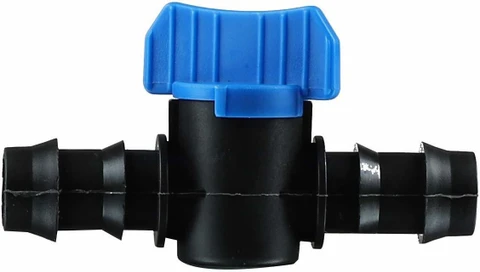
The hydraulic diaphragm valve is the key mechanism
Picture a globe-pattern body whose plug is replaced by a flexible reinforced diaphragm above the seat, with a control chamber over the diaphragm. Vent the chamber and line pressure under the diaphragm lifts it — the valve opens fully. Connect the chamber to upstream pressure and that same pressure, acting over the larger chamber area, presses the diaphragm shut. Everything the valve does is achieved by deciding, moment to moment, how much pressure sits in that chamber. The deciding is done by a pilot: a small spring-loaded valve sensing downstream (or upstream) pressure and bleeding the chamber accordingly. If downstream pressure sags below the pilot's spring setting, the pilot bleeds the chamber, the main valve opens further, downstream pressure recovers; if downstream rises, the pilot loads the chamber and the valve throttles. The result is continuous, powered-by-the-water-itself modulation with no external energy. A pressure-sustaining pilot senses upstream instead, opening only when upstream pressure exceeds the setting, protecting pump lines from being dragged down. A flow-control pilot senses differential across an orifice. A float pilot senses tank level. A solenoid in the pilot circuit lets a controller force the valve open or closed remotely, which is exactly how large automated zones are switched.