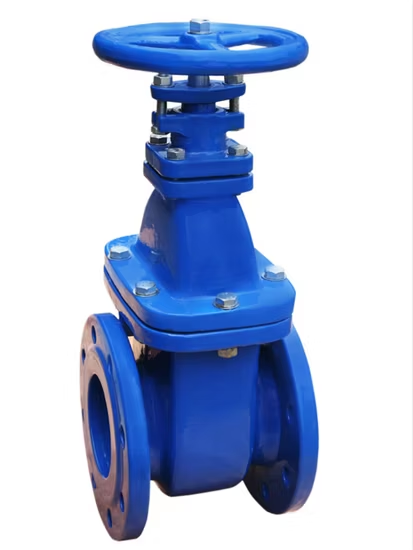
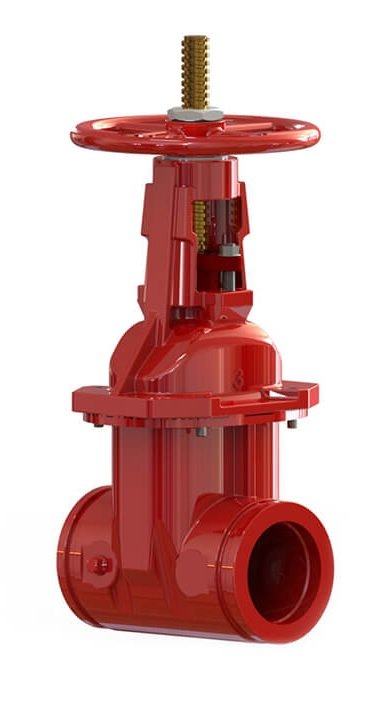
Mechanism: a blade, not a wedge, so the valve cuts through the medium instead of trapping it
Conventional gate valves shut a bore with a wedge-shaped disc dropping into a body cavity, but "for plastic solids and high-viscosity slurries such as paper pulp, a specialty valve known as a knife gate valve is used to cut through the material to stop the flow" — the gate itself is "usually not wedge shaped" but carries "a tapered knife-like edge on its lower surface" instead. Sealing is unforgiving by design: on a knife gate, "complete sealing occurs only at the final closure point and no over-travel is feasible," which is why precise gate travel, not just gate presence, is what determines whether the valve actually holds. Direction of seal is a separate design choice layered on top of the blade: trade literature distinguishes "uni-directional valves" from "bi-directional perimeter seal slurry valves," the latter built to hold pressure from either side rather than the one direction a standard knife gate seat is optimised for.