• Home›
  • Connection Type Butterfly Valves
  • Home›
  • Categories›
  • Valves›
  • Connection Type Butterfly Valves
  • Connection Type Butterfly Valves

    Source connection type butterfly valves from India's verified manufacturers and exporters on Himalay. Browse the full range for industrial and export applications.

    Showing 4 items
    4 items
    operation type
    Actuator
    Gear
    Lever
    body material
    CI
    DI
    SS316
    WCB
    end connection
    Flanged
    Lug
    Wafer
    seat material
    EPDM
    NBR
    PTFE
    Viton
    trim material
    SS304
    SS316
    Connection Type Butterfly Valves sourcing

    About Connection Type Butterfly Valves

    Butterfly valves by end connection: wafer, lug, double-flanged and U-section bodies, DN40 to DN1600, matched to PN, ASME and IS flange drillings.

    Butterfly valves are supplied in four main body-connection patterns, and choosing between them is as consequential as choosing the seat. Wafer bodies clamp between pipe flanges on long studs: the cheapest and lightest option, but the valve cannot hold pressure with downstream pipework removed. Lug bodies carry threaded lugs so each flange bolts independently, allowing downstream removal and end-of-line duty at a confirmed dead-end rating. Double-flanged bodies bolt to each flange with their own raised faces, the standard for buried water mains, pump stations and large sizes under AWWA C504 and IS 13095. U-section bodies, common in Indian waterworks practice, are short flangeless bodies with flat sealing faces suited to lower-cost isolation duty. Indian manufacturers supply all four patterns in cast iron, ductile iron, carbon steel and stainless, drilled to PN 10/16, ASME Class 125/150 or IS flange templates, with face-to-face to ISO 5752 and design to API 609, EN 593 or IS 13095 and testing to API 598. An enquiry should state the pattern, flange standard, size, rating, seat and disc materials, dead-end needs, operator and quantity.
    Buyer guide

    Specifying Butterfly Valve Connections: Wafer, Lug, Flanged, U-Section

    01

    Why the connection pattern is a real decision

    Two butterfly valves with identical seats, discs and ratings behave very differently in the pipeline depending on how the body meets the flanges. The connection pattern decides whether the valve can hold pressure at a line end, whether downstream pipework can be removed live, how large sizes are handled, and what the valve costs.

    02

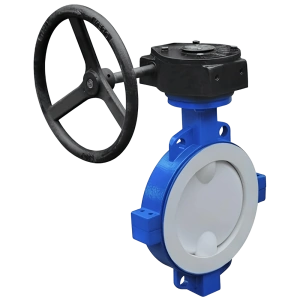
    Wafer

    The wafer body is a slim ring clamped between two pipe flanges by long studs passing right through. It is the lightest and cheapest pattern and the default for HVAC, water and general utility isolation where pipework stays bolted on both sides forever. Its one absolute limit: remove either flange and the valve holds nothing. Alignment on the studs needs care, and above about DN600 handling and centring become awkward.

    03

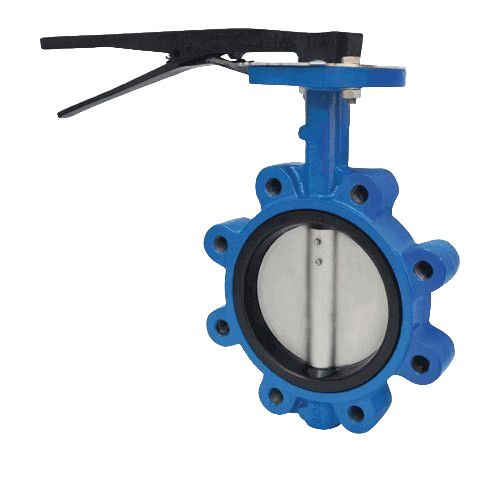
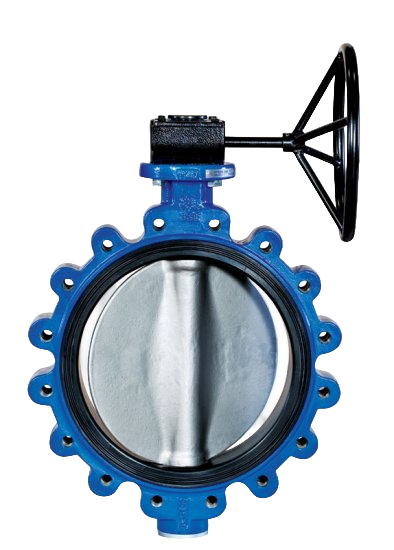
    Lug

    The lug body carries threaded lugs at each bolt position, so upstream and downstream flanges bolt on independently with short screws. Downstream pipework can be dropped with the valve in place, and the valve can terminate a line, though usually at a reduced dead-end rating that must be confirmed with the manufacturer. Lug is the sensible default on process pipework and anywhere maintenance access matters.

    04

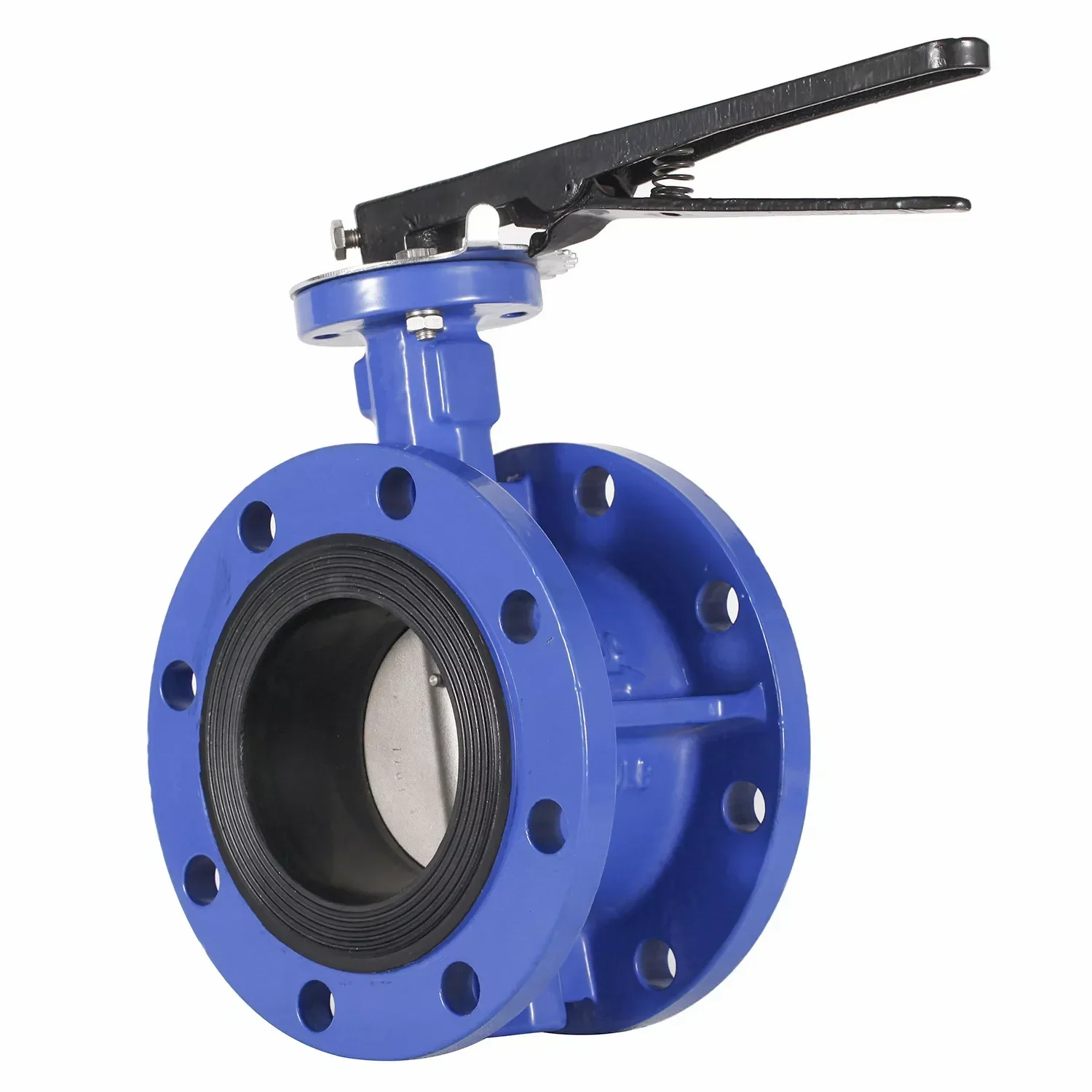
    Double-flanged

    The double-flanged body has its own raised-face flanges and gaskets each side, installing like any flanged fitting. It is the standard for waterworks and buried service under AWWA C504 and IS 13095, for pump stations, and for large diameters where wafer handling fails; face-to-face follows ISO 5752 series. It costs and weighs the most and earns it on infrastructure work.

    05

    U-section

    The U-section body, widespread in Indian waterworks practice under IS 13095, is a short flangeless body whose flat end faces seal against the mating flanges, giving a low-cost pattern for moderate-pressure water isolation. Confirm the mating flange drilling and any dead-end limitation just as for wafer bodies.

    06

    Materials and trim are chosen the same way regardless of pattern

    Cast iron and ductile iron with EPDM or NBR liners for water and utility duty; carbon steel and stainless bodies with high-performance seats for process services to API 609 and EN 593; testing to API 598 or EN 12266 throughout.

    What to state in the enquiry

    Pattern, line size, exact mating flange standard and rating (EN 1092-1 PN10/16, ASME B16.5 Class 150, IS 1538), seat, disc and body materials, medium and temperature, dead-end pressure if required, operator type with ISO 5211 pad where actuation is planned, governing standard, test certificates, quantity, and export packing or inspection requirements for shipment from India.

    Submit an enquiry →
    Technical guide

    How Butterfly Valve End Connections Work

    The body is part of the joint

    Unlike a gate or globe valve, whose flanges form self-contained joints, most butterfly valve patterns borrow their structural integrity from the pipework around them. Understanding how each pattern carries load explains every rule of thumb about their use.

    How a wafer joint works

    The wafer body is captured, not bolted: long studs run from the upstream flange to the downstream flange, and tightening them compresses the valve, its liner faces or gaskets, between the pipe flanges. The joint's strength is the studs' strength, and the valve is held against line pressure thrust purely by that clamped sandwich. Remove the downstream flange and nothing restrains the body against pressure except friction, which is why dead-end use of wafer valves is prohibited. Centring matters because an off-centre body lets the disc edge strike the pipe bore; most wafer bodies have locating holes or lugs that ride on the studs for this reason.

    How a lug joint works

    Threaded lugs turn the single long-stud sandwich into two independent bolted joints. Each side's screws carry that side's gasket load and pressure thrust, so either side can be unbolted while the other keeps the valve on the line. The subtlety is the load path in dead-end service: with no downstream joint, pressure thrust on the disc passes through the seat into the body and out through the upstream screws alone, and the body sees bending it never sees when clamped both sides. That is the mechanical reason dead-end ratings are reduced, not commercial caution.

    How a double-flanged joint works

    Each body flange forms a conventional gasketed joint, so the valve carries pipework loads through its own flanges like a spool piece. This is what buried service demands: soil settlement, thrust and pipe bending pass through the valve body without depending on long external studs that corrode in the ground. It is also why large-diameter and AWWA C504 or IS 13095 waterworks valves are double-flanged almost without exception.

    How a U-section joint works

    The U-section body behaves like a stiffened wafer: flat machined faces seal against the mating flanges under through-bolting, with the U-profile giving the short body enough rigidity for waterworks diameters at low cost. The same dead-end caution as wafer applies unless the maker states otherwise.

    What follows in service

    Disc swing is common to all patterns: the disc travels beyond the body faces when opening, so adjacent wafer check valves, reducers and short spools can foul it, and installation instructions to open the disc slightly during flange tightening apply regardless of connection. Gasket practice differs: rubber-lined bodies whose liners wrap the faces need no gaskets and are damaged by adding them; double-flanged and high-performance bodies need gaskets selected normally. Matching the drilling, rating and facing of the mating flanges, not just the DN, is what makes any of these joints work at all.

    Popular searches in Connection Type Butterfly Valves

    Frequently Asked Questions

    Wafer or lug — which body should I buy?
    Can a lug butterfly valve really be used for dead-end service?
    When is a double-flanged body worth its extra weight and cost?
    What must my RFQ state so the valve actually fits my flanges?